
The Art of the Decorating Vignette: How to Style Small Surfaces
A decorating vignette is the smallest, cheapest move that makes a room look finished, and you can pull one off on a random Tuesday with things you already own. If you have a blank console, a cluttered nightstand, or a shelf that feels a little sad, a vignette is the fix.
In this guide you will learn what a vignette actually is, one repeatable formula for building it, copy-and-paste recipes for the surfaces in your home, and how to rescue one that looks “off.”
What Is a Decorating Vignette?
A decorating vignette is a small, intentional grouping of objects that tells a little story on one surface. Think of a tray holding a candle, a stack of books, and a sprig of eucalyptus on your entry table. Nothing in it is fancy, but together the pieces look chosen rather than dropped.
It helps to separate a vignette from two lookalikes:
- A tablescape styles an entire table, usually for dining or entertaining. A vignette is one grouping on part of a surface.
- A pile of stuff is what happens when objects share a surface without a plan. A vignette has an anchor, a rhythm of heights, and room to breathe.
Vignettes punch above their weight because they are cheap, fast, low-commitment, and endlessly swappable. If you hate it, you have lost ten minutes, not a weekend.
The One Formula: Anchor, Height, Life, Breathing Room
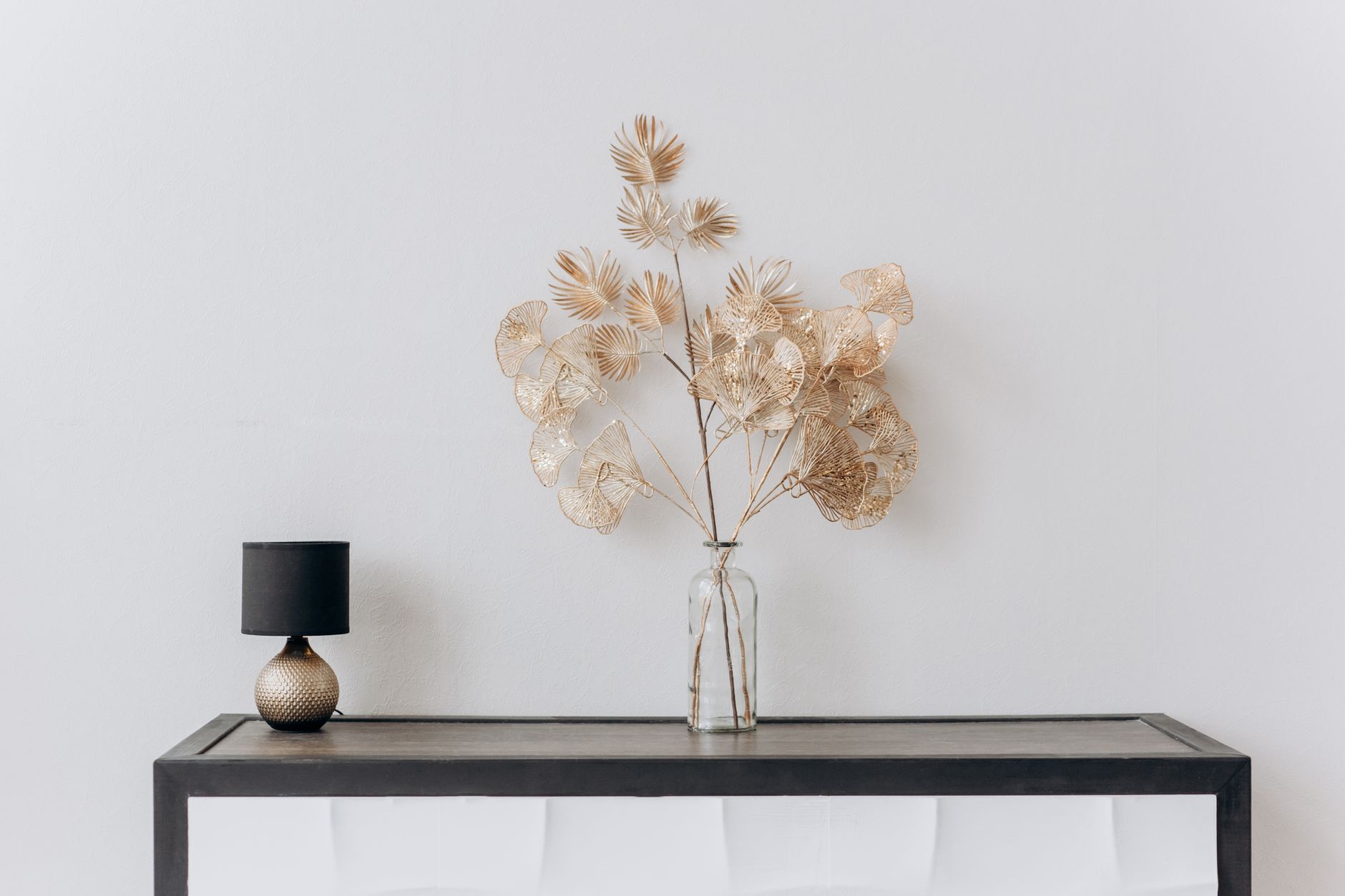 Photo by Mikhail Nilov on Pexels
Almost every good vignette comes down to four ingredients.
Anchor
Choose one grounding piece that everything else relates to. It might be a tray, a stack of books, a lamp, or a framed print. The anchor is usually the largest or heaviest-looking item, and the rest of the group leans toward it visually.
Height
Add something tall so the eye travels up and across the group. Aim for a low, medium, and tall rhythm: a small dish, a mid-size vase or stack of books, and a lamp, candlestick, or leaning frame at the back. When everything sits at the same height, the grouping flattens out.
Life
Include one living or organic element, such as a small plant, a few stems in a bud vase, or even a single leaf in a glass. It softens hard edges and stops the scene from looking staged. If you want ideas that are easy to keep alive, our post on decorating with plants covers the low-maintenance options.
Breathing Room
Leave some empty surface on purpose. Negative space reads as “considered,” while a surface filled edge to edge reads as unfinished. When in doubt, take one object away.
Why Odd Numbers Work
Groups of three or five feel relaxed and natural. Matched pairs and even counts tend to read stiff, like a hotel nightstand. You can still use two lamps in a room, just avoid mirroring every object around them.
Layering, Texture, and the Tricks Stylists Use
Once you have the four ingredients, a few small techniques make the difference between “fine” and “wow.”
- Build levels. Slide a hardcover book or a small riser under a short object to lift it. Stacked books are the cheapest riser there is.
- Overlap objects. Let a frame lean behind a vase, or let a plant sit slightly in front of a candlestick. Overlap ties pieces together. A zig-zag placement, where each item sits slightly forward or back of the one beside it, keeps the eye moving.
- Mix finishes. Pair shiny with matte, hard with soft, smooth with woven. A glossy ceramic bowl beside a rattan tray is more interesting than two objects of the same material.
- Echo the room. Pull one or two colors from the surrounding space, like the throw pillow on the nearby sofa or the tone of the rug, so the grouping belongs there.
- Run the photo test. Snap a quick phone photo. Small screens exaggerate imbalance, so you will spot a lopsided or cluttered group in about ten seconds.
If you are styling more than one room, our whole-home styling guide shows how to keep these small moments consistent from space to space.
Surface-by-Surface Recipes
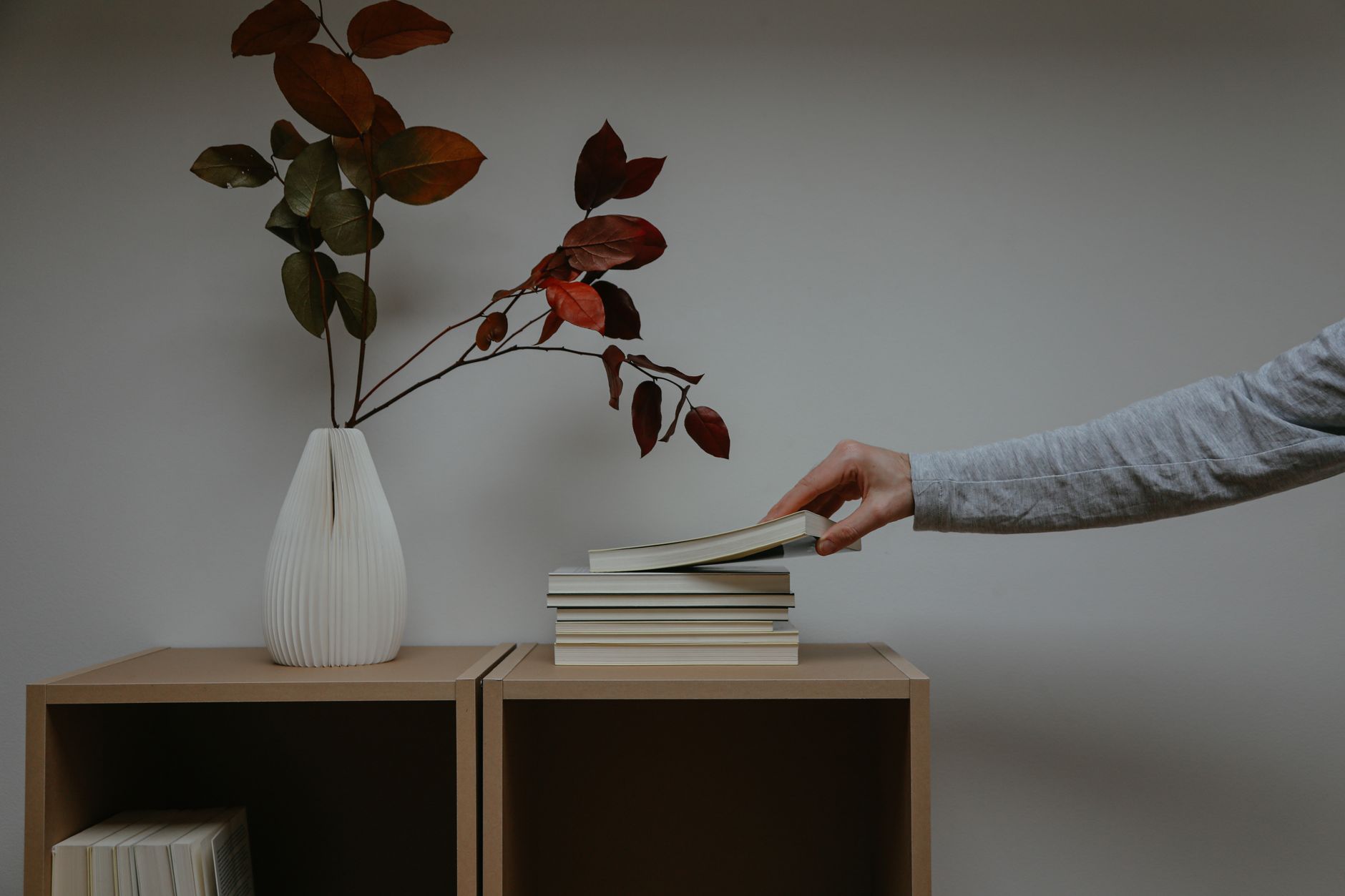 Photo by Cup of Couple on Pexels
Generic formulas only go so far. An entry table works harder than a mantel, and a bathroom shelf has to survive steam. Use these as starting points.
Entry Console or Hallway Table
Function comes first here. Anchor with a mirror or large piece of art on the wall, add a lamp for height, then place a small tray for keys and mail. Finish with a few stems in a slim vase. Keep one side open so there is a spot to drop a bag.
Nightstand
This surface works hard, so keep it uncrowded. Use the lamp as your anchor, then add a small stack of two books, a candle or tiny dish for jewelry, and one low plant. Three to four items is plenty.
Fireplace Mantel
Go taller and off-center. Place a large piece of art or mirror leaning to one side, balance it with candlesticks or a tall vase on the other, and tuck greenery in between. Skip the perfectly symmetrical lineup.
Bookshelf Shelf
Layer from front to back. Put taller items behind, shorter ones in front, and use bookends or a horizontal stack to vary the rhythm. Give each shelf one sculptural object and leave a few gaps. If shelves are your biggest challenge, here is how to style a bookshelf in more depth.
Coffee Table
Corral things on a tray so the table feels organized. Add one or two coffee table books, a bud vase, and keep a good portion of the surface open for mugs and remotes.
Bathroom, Bar Cart, and Windowsill
Keep these practical. In a bathroom, use a small tray with a soap dish, a candle, and a plant that tolerates humidity, like a pothos. On a bar cart, group bottles on a tray by height and add a small bowl of citrus. On a windowsill, three small vessels in varying heights catch the light nicely.
Why Your Vignette Looks “Off” (and the Quick Fix)
Most problems come down to a handful of causes.
- Everything is the same height. Add a riser or a taller stem.
- It is too symmetrical. Break the pair and go to an odd number.
- It is overcrowded. Remove one to three things and respect the negative space.
- No living element. Add a plant, a few branches, or fresh flowers.
- It floats in the middle. Anchor the group to one side and cluster the pieces tighter.
- The colors clash with the room. Swap one item for something that echoes a color already nearby.
Fix one thing at a time, then run the photo test again.
Style It With What You Already Own
You do not need to shop to build a good vignette. Walk through your house with a basket and collect books, trays, bowls, framed photos, a kitchen crock, a candlestick from the dining room, and anything you have tucked away in a closet. Group them on a surface, edit, and step back.
If you do want to spend a little, one $10 to $15 upgrade goes a long way. A small tray or a simple bud vase gives the group a clear anchor and a place for something living.
Keep It Fresh: A Simple Seasonal Swap System
Leave the anchor and one or two staples permanent, then rotate only the “life” element and one accent by season. That way, the vignette stays current without you re-buying the whole scene.
- Winter: bare branches or evergreen clippings and a pillar candle.
- Spring: tulips, blossoms, or a small potted herb.
- Summer: shells, a bowl of lemons, or wildflowers.
- Fall: mini gourds, dried grasses, or a branch of turning leaves.
The whole swap takes about five minutes, and the room feels refreshed.
Frequently Asked Questions
What is a decorating vignette?
A decorating vignette is a small, intentional grouping of objects styled together on one surface. It creates a finished, story-telling focal point, like a tray, candle, and stems on a console table.
How many items should be in a vignette?
Aim for an odd number, usually three or five. Odd groupings feel relaxed and balanced without tipping into clutter.
Where should you place a vignette in your home?
Any small surface works. Good spots include an entry console, mantel, nightstand, bookshelf, coffee table, dresser, windowsill, or bar cart.
What’s the difference between a vignette and a tablescape?
A vignette is a small grouping on part of a surface. A tablescape styles an entire table, often for dining or entertaining.
How do you start a vignette?
Begin with one anchor piece, such as a tray, books, a lamp, or art. Then build height, add a living element, and leave breathing room.
Why does my vignette look cluttered or “off”?
It is usually too many items, everything at one height, or no negative space. Remove a piece, add a riser, and anchor the group to one side.
How do you style a vignette on a budget?
Shop your own house first. Books, trays, bowls, plants, and framed photos you already own can make a complete vignette for free.
How often should you change a vignette?
Refresh it seasonally by swapping just the greenery and one accent. Keep the anchor and staples in place so it is quick to update.
Start With One Surface Tonight
The formula is simple: an anchor, some height, something alive, and room to breathe. Pick one surface, gather what you already own, and give yourself ten minutes. Once you see how much a single vignette changes a room, you will want to do another. For more ideas, browse our Decorating posts, and sign up for the newsletter to get new ideas in your inbox.


