
Bookshelf Styling: How to Style a Bookshelf That Looks Curated, Not Cluttered
Bookshelf styling is one of the fastest ways to make a room feel finished. A bookcase is one of the biggest surfaces in any room, so when it reads as plain storage, it drags the whole space down. When it’s styled well, it looks collected, personal, and a little bit expensive, and it rarely costs anything.
This guide gives you the one ratio that stops shelves looking like storage, a shelf-by-shelf formula you can copy from top to bottom, and the tricks that keep it all looking good in a home where people actually live and read. You can do the whole thing in an afternoon.
Start With a Blank Shelf (Yes, Take Everything Off)
You can’t style a pile you can’t see. Clear every shelf completely and lay everything out on a table or the floor where you can look at it all at once.
As you unload, sort:
- Books by size and, loosely, by color or cover style.
- Decor into three piles: keep, maybe, and retire.
- Sentimental pieces into their own group, so you can place them on purpose.
Before you buy anything, shop your house. Vases, bowls, picture frames, small art, wooden boxes, and candle holders from other rooms all make good shelf material. Most shelves need less new stuff than you think.
The Books-to-Decor Ratio (the “Bookshelf Rule”)
 Photo by Sergey Torbik on Pexels
The most useful guideline in bookshelf styling is a simple ratio: roughly 70% books and 30% decor. Books lead, and objects punctuate. If you want a more decorative, showroom feel, nudge it toward 60/40. If you actually read from these shelves daily, 80/20 is perfectly fine.
A second way to think about it is the rule of thirds: one third books, one third objects, and one third open space. It’s a bit more airy, and it works especially well on shelves that sit in a focal spot like beside a fireplace.
Then there’s orientation. Aim for about 60% of your books upright and 40% stacked flat. Upright spines give structure and rhythm, while horizontal stacks add spontaneity and double as risers for decor.
None of these numbers need a calculator. Squint at the shelf and ask whether books still feel like the main event.
Build Every Shelf From the Same 6 Ingredients
Principles are nice, but most people want a recipe. Here is one you can apply to every shelf. Think of it as six ingredients, and you rarely need all six on one shelf.
- An anchor. A horizontal stack of books or a heavier object that grounds one side of the shelf.
- A run of vertical books. Upright spines, ideally ending against the anchor, a heavy object, or real bookends so they don’t slump.
- A horizontal stack as a riser. Lay two or three books flat and set a small object on top, like a bowl, a box, or a little sculpture. The stack lifts the object and creates a second level.
- Something tall. A vase, a piece of leaning art, or a few branches in a jug to pull the eye upward.
- Something organic. A trailing plant on a high shelf, a small succulent on a low one, or dried stems. If you want more ideas, our piece on decorating with plants goes deeper on which varieties thrive indoors.
- Breathing room. Leave about 20 to 30 percent of each shelf deliberately open. Empty space is what makes the filled space look intentional.
Repeat this loosely on every shelf, but change which ingredient leads. Shelf one might be anchored by a tall vase, shelf two by a big book stack, and shelf three by a plant. That variety keeps the whole unit from looking like a template.
Layer Height, Texture, and Shape So It Doesn’t Look Flat
Once the formula is in place, look at the bookcase as one composition rather than a stack of separate boxes.
Think low, medium, tall across the whole unit
Scan your eye from the top left to the bottom right. You want a rhythm of low, medium, and tall pieces moving across the entire bookcase, not just within each shelf. If every tall object sits on the same side, the unit will feel lopsided.
Mix finishes and silhouettes
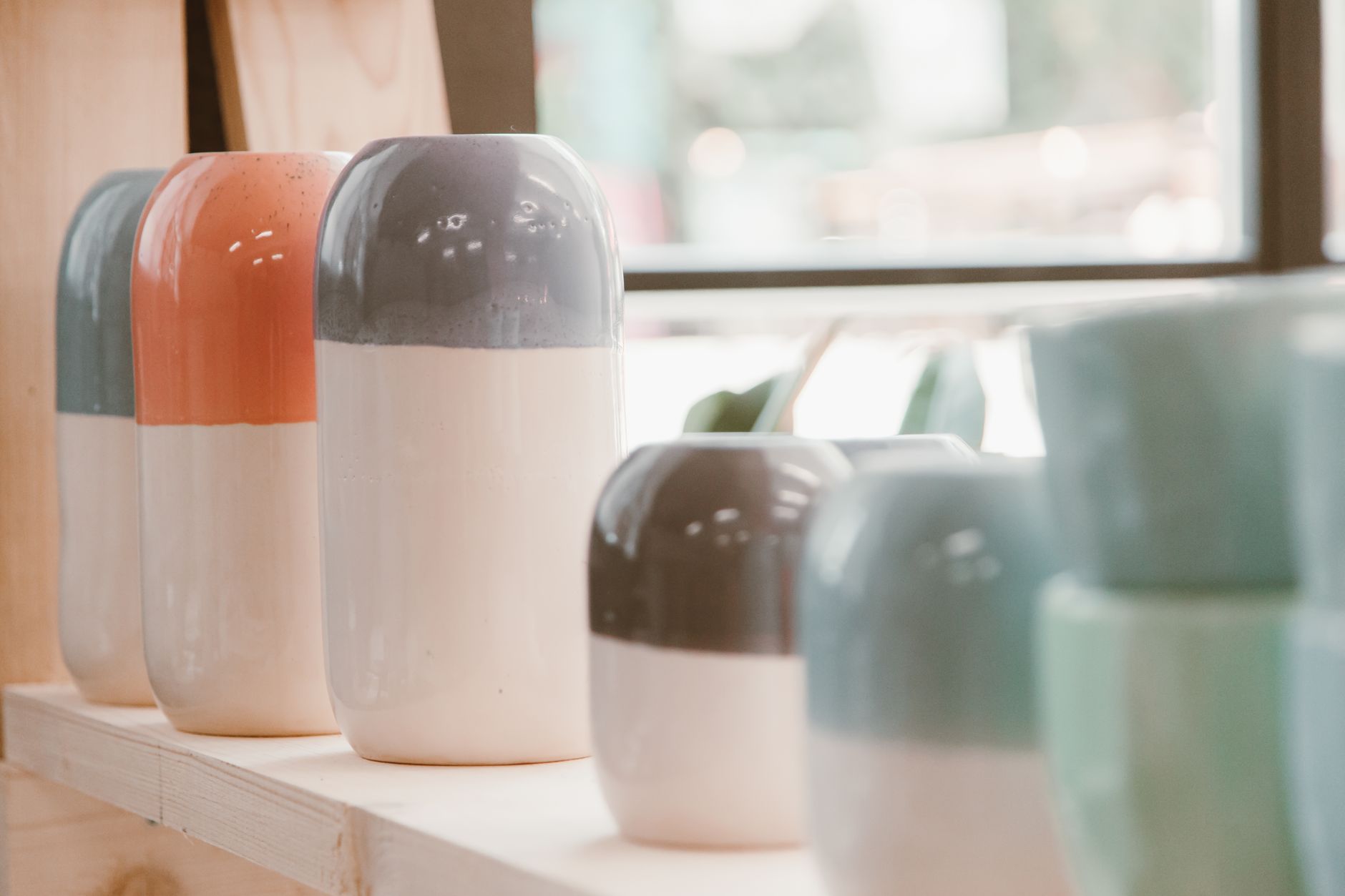 Photo by ROMAN ODINTSOV on Pexels
Put shiny next to matte, smooth next to woven, and hard next to soft. A glazed ceramic vase looks better beside a woven basket and a stack of linen-covered books than beside another glazed vase. In the same way, mix round, boxy, and irregular shapes. A shelf full of same-sized square objects reads monotonous fast.
Layer front to back
Deeper shelves are begging for layers. Lean a framed print or a small canvas against the back, then set objects in front of it. The overlap creates depth and keeps small pieces from getting lost in a deep cubby. If you enjoy this kind of composition, the same logic applies to small arrangements, which we cover in our guide to styling vignettes.
Add Color and Cohesion Without Going Rainbow
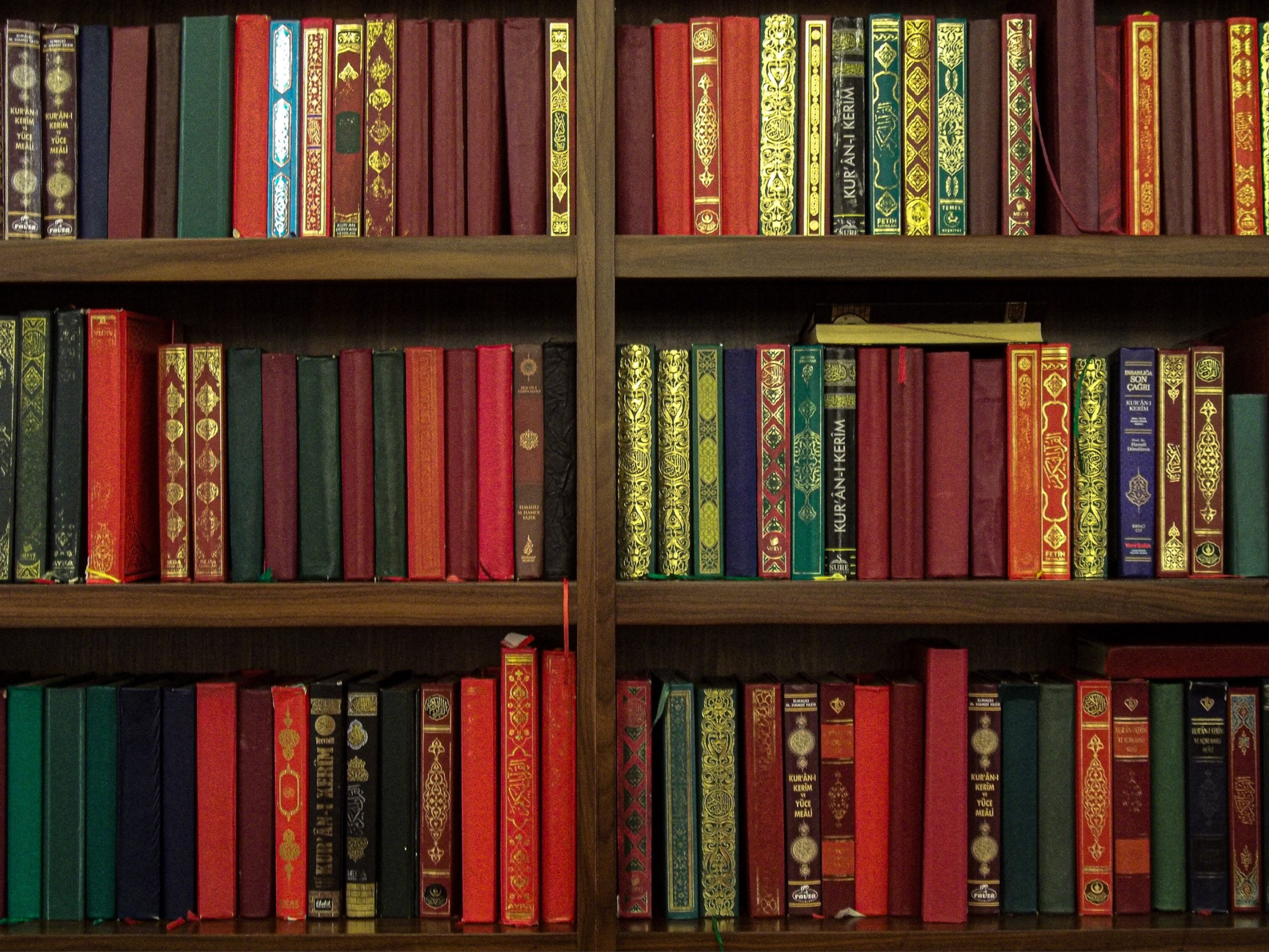 Photo by Yasemin Gül on Pexels
Color-coding spines can look fantastic on a modern shelf, but it can also feel gimmicky if it’s the only idea in the room. Use it when your collection is large and you want a calm, graphic look. Skip it when you actually need to find books by title.
A few easier ways to build cohesion:
- Group like with like. A cluster of blue-and-white ceramics reads as a deliberate collection.
- Limit your palette. Pick two or three main colors and repeat them across shelves, then add one or two contrast pops for energy.
- Tame loud paperbacks. Turn the bright, distracting ones around so the pages face out, or tuck them into a basket. Some people hate the flipped-spine look because it hides titles, so only do it to a few and only if the shelf is mostly decorative.
Make It Personal (This Is the Part That Reads “Curated”)
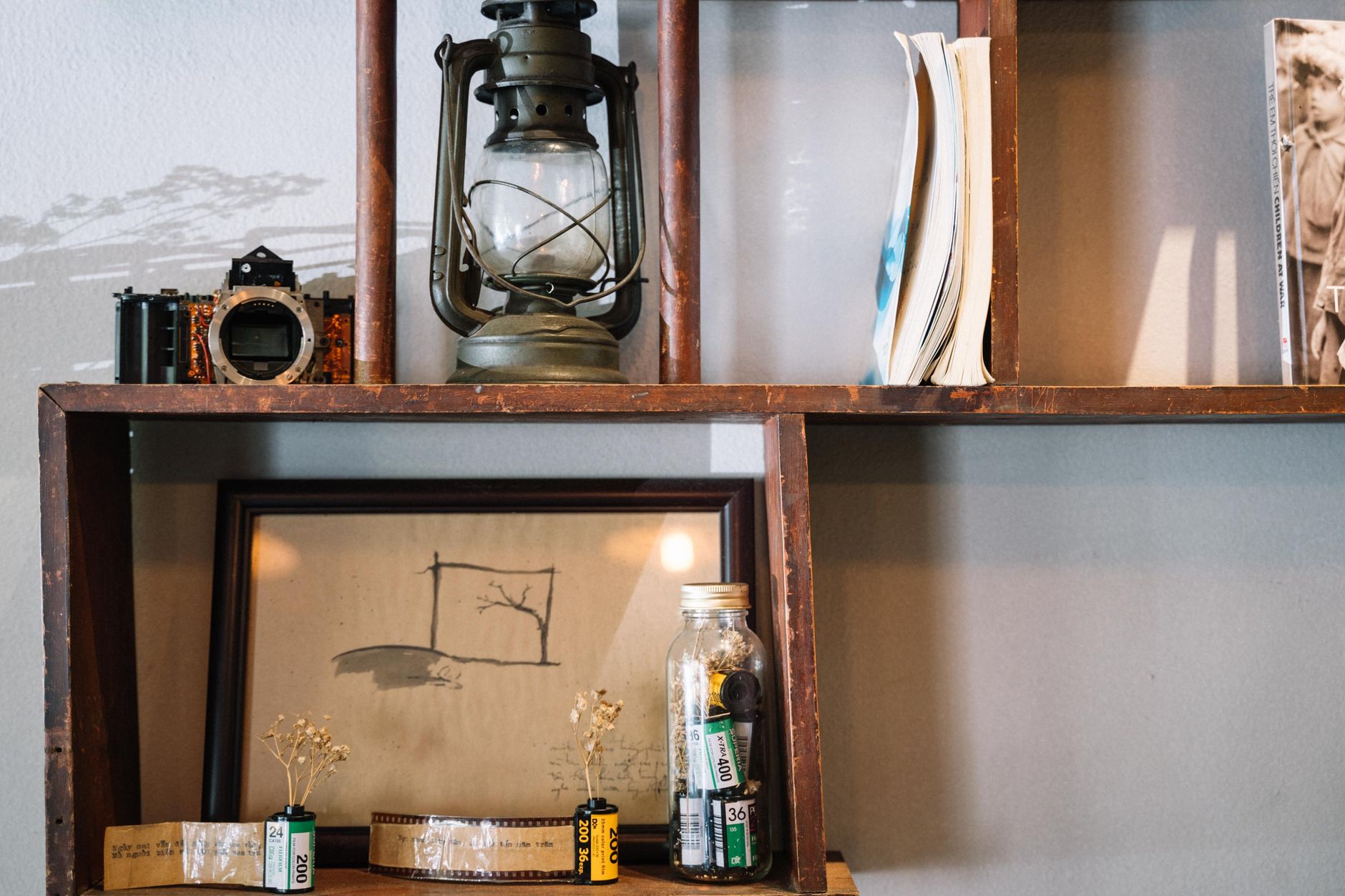 Photo by Anna Tarazevich on Pexels
Matched sets of decor look bought. Personal pieces look collected. Weave in framed photos, travel finds, a thrifted ceramic, a child’s drawing in a nice frame, or a small piece of art you love. Those are the objects that make a visitor lean in and ask where something came from.
Curated is also earned slowly. Leave a few gaps instead of filling every spot the day you style. As you find pieces you love, they’ll slot into the open space, and the shelf will keep getting better.
Styling Real, Lived-In Shelves
A shelf that only looks good the day you style it isn’t much use. Here is how to keep it working when there are kids, pets, and real readers around.
- Think about height. Put fragile or tall items up high and sturdy books, baskets, and boxes down low where small hands and tails reach.
- Work with a big, mismatched collection. Don’t hide it. Group books by size or color within each section, add a few horizontal stacks to break up the spines, and let the books be the texture.
- Hide the un-styleable in plain sight. Lidded baskets and boxes swallow cables, board games, remotes, and general clutter, and they look like decor.
- Do a five-minute reset. When the shelf drifts back into storage mode, straighten the book runs, restack the risers, return the objects to their spots, and clear anything that doesn’t belong. That’s all it takes.
Plan a light refresh each season, like swapping a vase for a seasonal branch or moving a few books, and use the five-minute reset in between.
Common Bookshelf Styling Mistakes to Avoid
- Overcrowding. Filling every inch leaves no negative space, and the shelf reads as clutter even if every item is lovely.
- Everything at the same height, or every spine upright. Without variety, the eye has nowhere to travel.
- Ignoring scale. Tiny trinkets get lost on a big shelf. Group small items together or swap them for something larger.
- Perfect symmetry and matched pairs. They read stiff and showroom-like. Odd-numbered, asymmetric groupings feel more relaxed.
Frequently Asked Questions
What is the bookshelf rule?
It’s the popular guideline of roughly 70% books to 30% decor, so books lead and the shelf doesn’t look bare or stuffed. Some designers use a rule-of-thirds split of books, objects, and empty space instead. Either way, the goal is balance.
How do I style a bookshelf without it looking cluttered?
Leave 20 to 30 percent of each shelf empty, group items in odd numbers, and edit ruthlessly. Less on the shelf almost always reads as more intentional.
What should I put on a bookshelf besides books?
Vases, ceramics, framed photos and small art, boxes, plants, sculptural objects, and baskets all work well. Baskets are especially useful for hiding clutter in plain sight.
Should books be vertical or horizontal on a shelf?
Both. Aim for about 60% upright and 40% stacked flat, and use the horizontal stacks as risers for small decor pieces.
How do I style a bookshelf on a budget?
Shop your house first and use the books you already own as the main material. Add a plant or two before buying anything new.
What is the rule of three in shelf styling?
Group decor in odd numbers such as 3, 5, or 7. Asymmetric clusters read as intentional, while pairs tend to look stiff.
How do I style deep or tall built-in shelves?
Layer front to back, with leaned art behind and objects in front. Use taller pieces so items don’t get lost in the depth.
How often should I restyle my bookshelf?
A light refresh each season is plenty. In between, do a quick five-minute reset whenever it drifts back into storage mode.
Your Shelf, Styled
To recap: clear it all off, hit the 70/30 ratio, build each shelf from the six ingredients, and then add the personal pieces that make it yours. Start with just one shelf this weekend and see how it feels before tackling the rest.
If you’re ready to take the same approach to the rest of your space, our home styling guide walks through it room by room. And if you’d like more simple, affordable ideas like this, join the newsletter and we’ll send them straight to your inbox.


