
Curtains vs. Blinds vs. Shades: Which to Choose
You’ve got bare windows, maybe in a new place, maybe because you finally admitted the old ones had to go, and three options are staring back at you: curtains, blinds, shades. They look like they “kind of do the same thing.” They don’t. Each one wins at a different job, and the curtains vs blinds question (plus where shades fit in) comes down to five practical factors, not just which one looks nicest in a catalog photo.
Here’s a plain-English breakdown of how curtains, blinds, and shades differ on light, privacy, cost, cleaning, and looks, a quick decision path so you can stop second-guessing, and a room-by-room cheat sheet so you know exactly what to order.
First, What’s the Actual Difference?
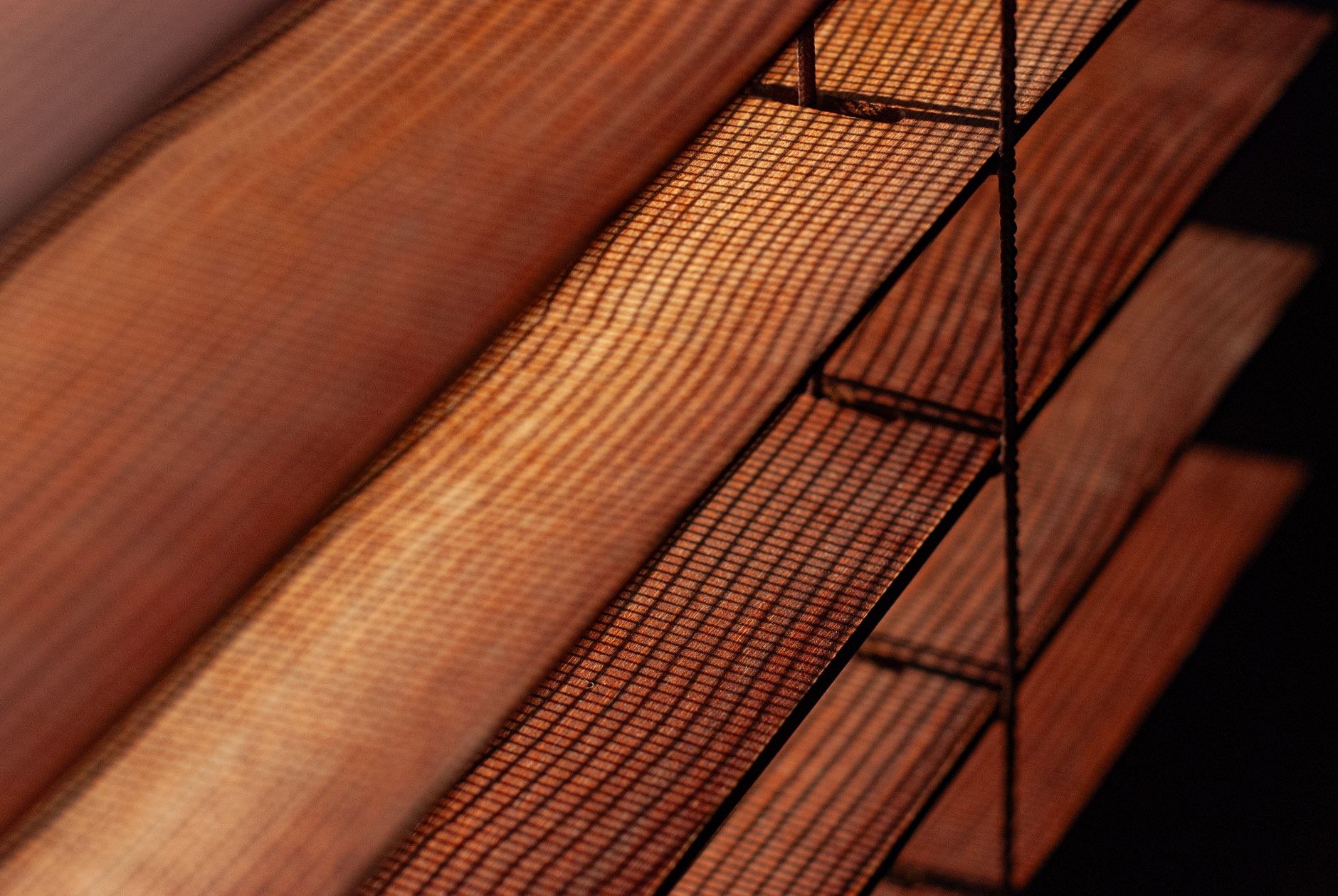 Photo by Anastasiia De Oliveira on Pexels
Before comparing them head to head, it helps to know what you’re actually looking at in the store or the catalog.
Curtains (and drapes) are soft fabric panels that hang from a rod. “Curtains” is the general term; “drapes” usually means a heavier, lined version meant to block more light and sound. Either way, they’re the softest, most decorative option, with the widest range of colors, patterns, and fabrics of the three.
Blinds are a hard window treatment made of individual slats, horizontal (Venetian, mini, faux-wood) or vertical, that tilt open and closed. Because you can angle the slats instead of just raising or lowering them, blinds give you the most precise control over exactly how much light comes in and from what angle.
Shades are one continuous piece of fabric or material, no slats, that rolls up or folds as you raise it. Common types include roller shades, Roman shades, cellular (honeycomb) shades, and solar shades. Shades give a cleaner, more streamlined look than blinds and, in the case of cellular shades, some of the best insulation you can buy.
That “no slats” detail is the whole reason people confuse shades and blinds. If it has slats that tilt, it’s a blind. If it’s a single piece that rolls or folds, it’s a shade. Curtains are the odd one out, fabric on a rod, not mounted inside or against the window frame.
The 5 Things That Actually Decide It
Once you know what each option is, the real decision comes down to five factors.
Light control. Blinds win on precision because you can tilt the slats to fine-tune exactly how much light gets through without fully closing them. Blackout curtains and blackout cellular shades win on total darkness. Sheer curtains and solar shades are the move if you want soft, filtered daylight without a stark room.
Privacy, day and night. This is where a lot of people get caught out. Slatted blinds and sheer curtains can look private during the day but turn see-through at night once your interior lights are on and the sun isn’t. If nighttime privacy matters (bedrooms, ground-floor windows facing the street), you want a fully opaque option like lined curtains, cellular shades, or closed faux-wood blinds.
Energy efficiency and insulation. Cellular shades trap air in their honeycomb pockets and are the strongest insulators on this list, followed by lined or thermal curtains. Bare blinds, with gaps between the slats, are the weakest at keeping heat in or out, even when fully closed.
Cost and installation. Ready-made curtains are usually the cheapest and easiest option: no drilling required if you use a tension rod, and swapping them takes minutes. Blinds and shades, especially custom-fit ones, tend to cost more and often need to be mounted inside or outside the window frame, which usually means measuring carefully and drilling.
Maintenance and cleaning. Faux-wood and vinyl blinds wipe clean in seconds, which makes them a favorite for kitchens and bathrooms. Curtains are washable but take more effort (and sometimes a trip to the dry cleaner for lined drapes). Fabric shades look great but tend to trap the most dust in their folds, especially Roman shades.
Here’s how they stack up at a glance:
| Priority | Best pick |
|---|---|
| Total darkness | Blackout curtains or blackout cellular shades |
| Precise light angle | Blinds |
| Insulation / energy bills | Cellular shades or lined drapes |
| Lowest upfront cost | Ready-made curtains |
| Easiest to wipe clean | Faux-wood blinds or vinyl roller shades |
| Most decorative range | Curtains |
| Cleanest, most streamlined look | Shades |
Quick Decision Guide: Start With What You Care About Most
If you don’t want to weigh all five factors at once, just answer one question: what matters most to you right now?
- Total darkness for sleep: blackout curtains or blackout cellular shades.
- Precise daytime light angles: blinds.
- Best insulation or lower energy bills: cellular shades or lined drapes.
- Coziness, color, and drama: curtains.
- Easy wipe-down for moisture or grease: faux-wood blinds or vinyl roller shades.
- Lowest upfront cost: ready-made curtains.
Pick the row that matches your top priority, and you’ve got your answer before you even open a paint swatch app.
Room-by-Room: What to Hang Where
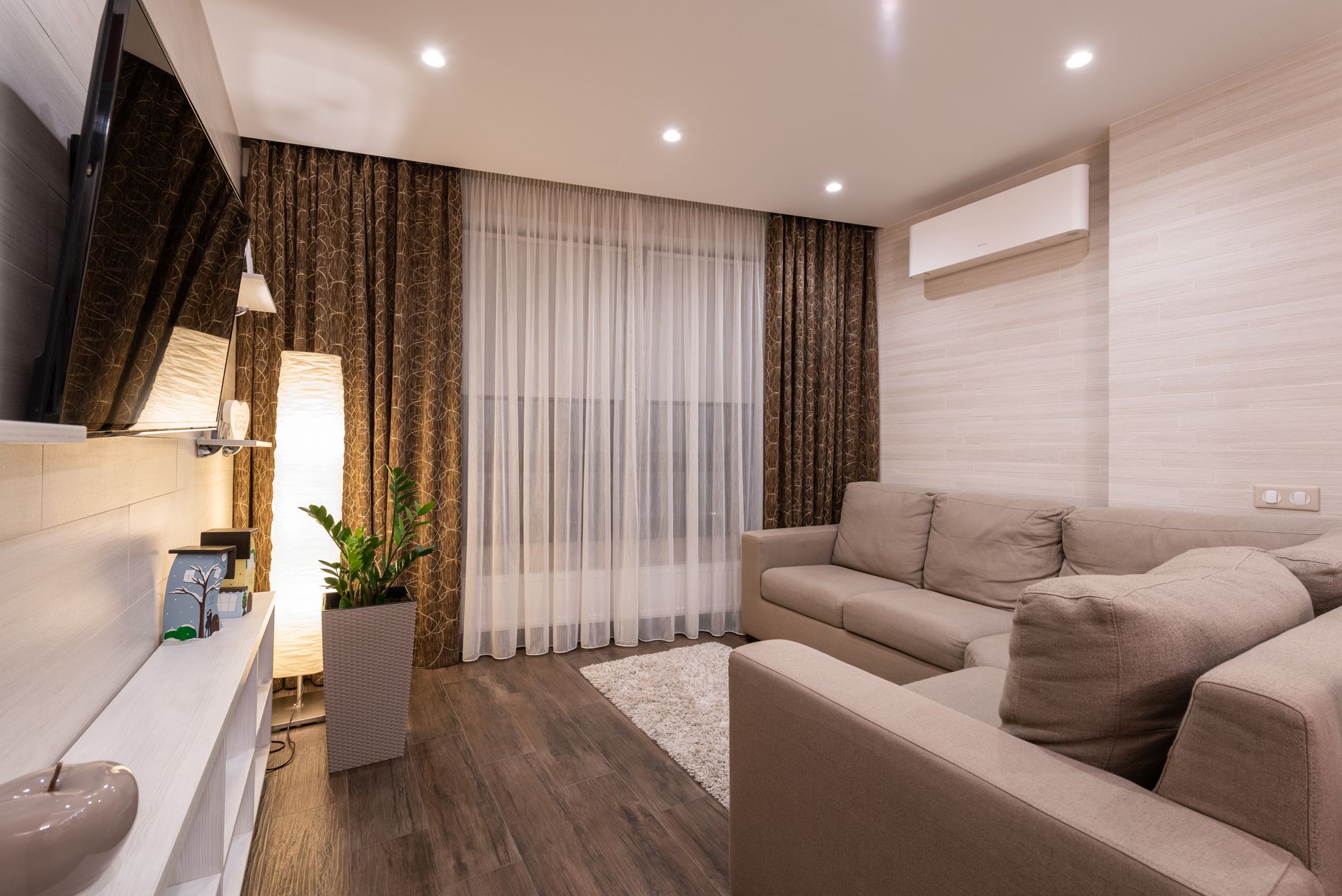 Photo by Max Vakhtbovych on Pexels
Bedroom: blackout curtains or blackout cellular shades for real darkness and nighttime privacy. This is the one room where “good enough” light blocking usually isn’t good enough.
Living room: this is where drapery earns its keep. Full-length panels add warmth and visual height, and you can layer them over blinds or shades underneath for flexibility (more on that below).
Kitchen: faux-wood blinds or roller shades. Both wipe down fast, which matters near a stove and sink where grease and moisture are constant.
Bathroom: moisture-resistant shades or faux-wood blinds. Skip fabric curtains here; humidity is not kind to them over time.
Home office: solar shades or blinds to cut screen glare without turning the room into a cave. You still want daylight, just not a laptop full of reflections.
Big windows and sliding doors: vertical blinds, panel-track shades, or extra-wide drapery. Standard blinds and shades often can’t span these widths gracefully; consider choosing the right curtain length if you’re going the drapery route, since a too-short panel on a big window reads as a mistake instantly.
The Pro Move: Layering for the Best of Both Worlds
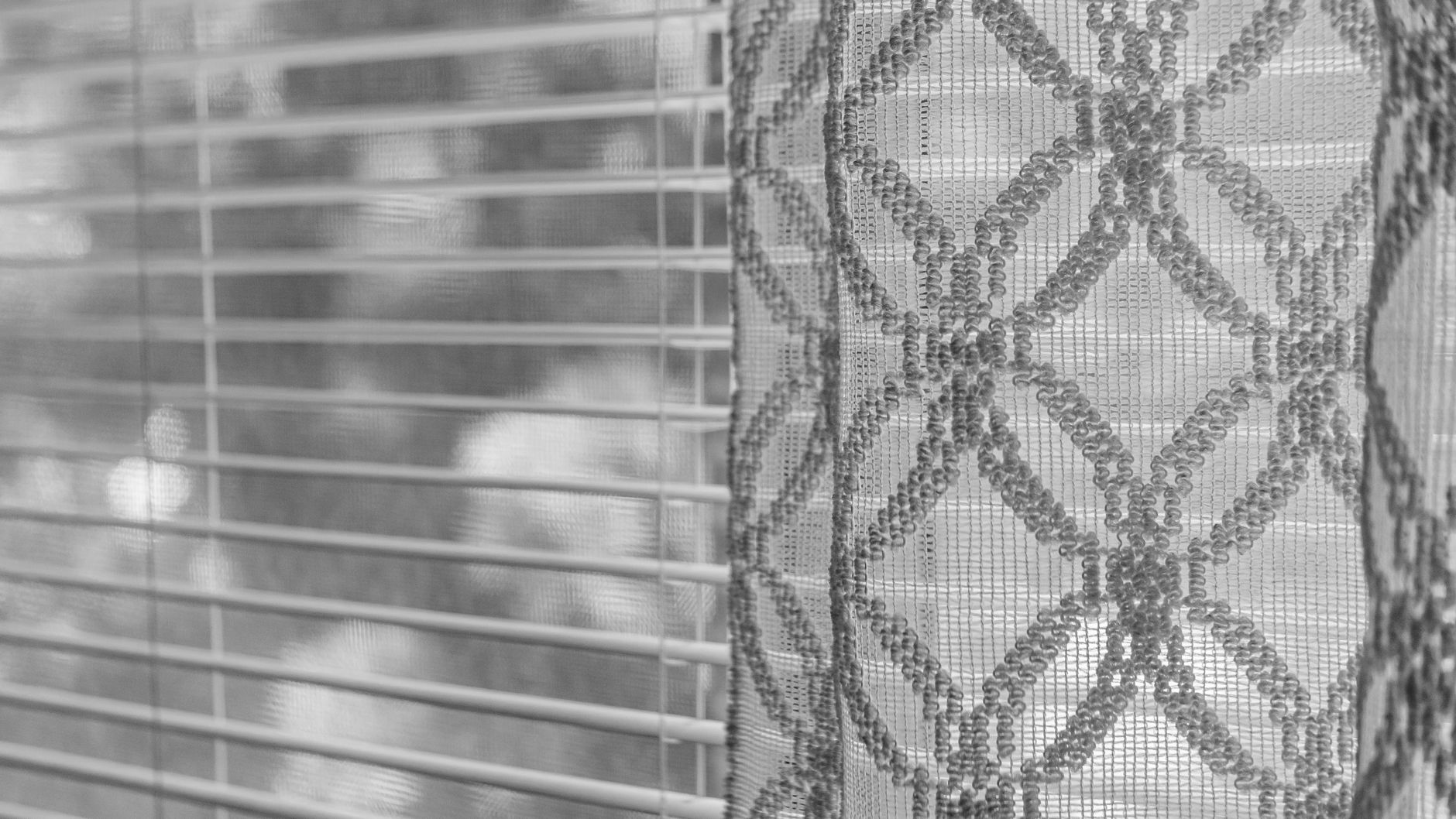 Photo by Robert So on Pexels
Here’s the trick interior designers use constantly and most people never think to try: layer a functional shade or blind inside the window frame, then hang decorative curtain panels outside it, mounted wider and higher than the frame itself.
You get the function of the blind or shade (light control, privacy, insulation) and the softness and color of the curtains, without either one having to do the whole job alone. It also looks more designed and intentional than either treatment on its own, at very little extra cost since ready-made panels and a basic shade are both inexpensive. If you’ve never hung curtains before, a quick read on how to hang curtains will get the hardware placement right on the first try.
Renting? No-Drill and Landlord-Safe Options
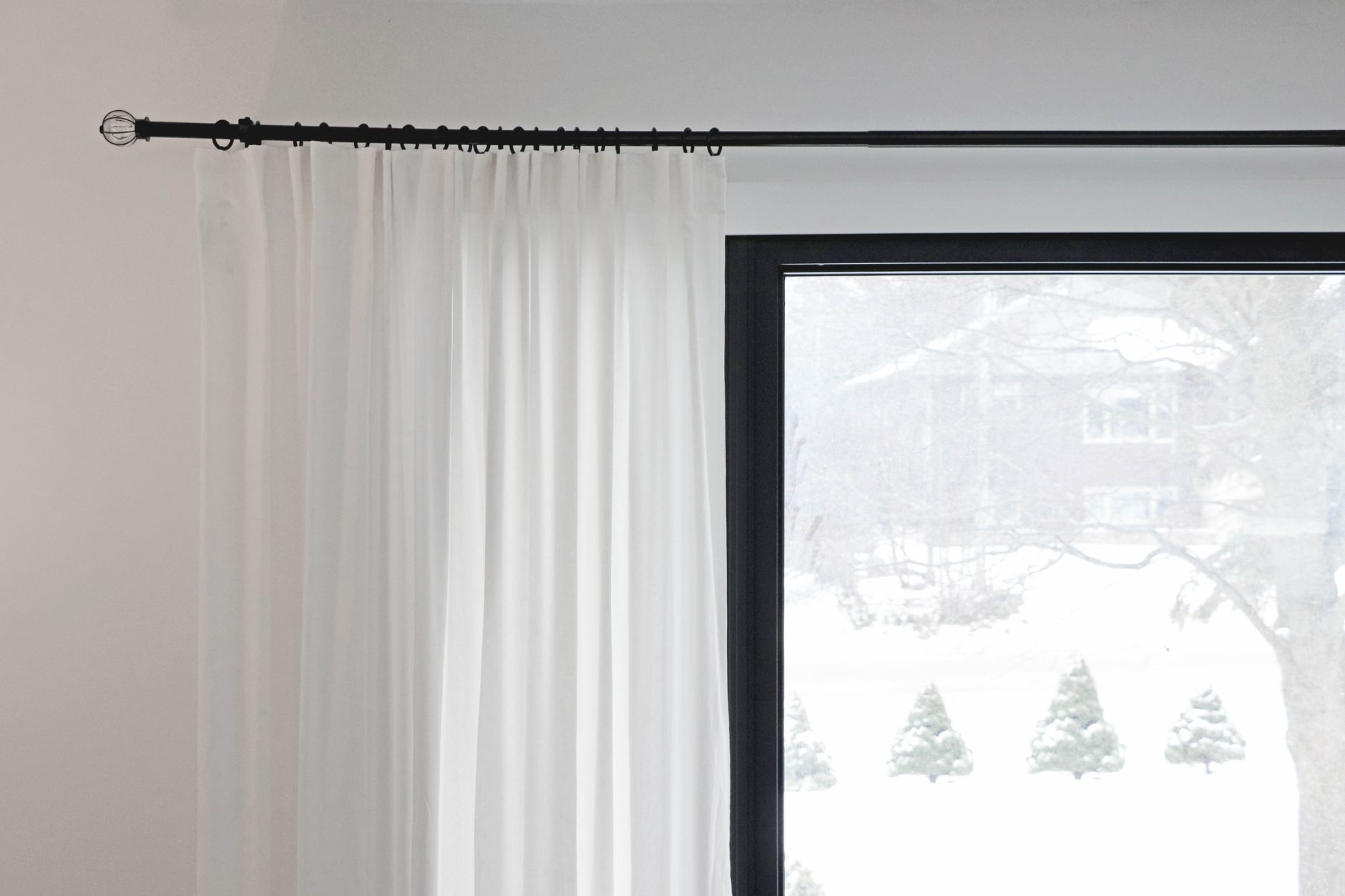 Photo by Designecologist on Pexels
Most comparisons assume you own the place and can drill wherever you want. If you’re renting, you have real options that won’t put your security deposit at risk.
Tension rods hold curtain panels with spring pressure alone, no hardware, no holes, and they come out just as easily when you move. No-drill curtain brackets use strong adhesive or clamp onto existing trim. Adhesive-mounted or cordless cellular shades are widely available now and install with strips instead of screws. Command-hook mounting works for lightweight panels and some shade brackets. All of these travel with you and leave the window frame exactly as you found it.
Cost and Lifespan: What You’ll Really Spend
Upfront price is only half the story; what a treatment costs over years of ownership is the more honest number.
Ready-made curtains are the cheapest to buy, often under fifty dollars a panel, and easy to replace if a color goes out of style or a fabric fades. Basic blinds are similarly affordable off the shelf but get expensive fast once you go custom-fit. Cellular and Roman shades usually cost more upfront but tend to last for years with minimal upkeep beyond an occasional vacuum with a brush attachment.
Cleaning costs matter too. Wipeable faux-wood blinds and vinyl shades need nothing but a damp cloth. Curtains occasionally need washing or professional cleaning, which adds up over a decade of ownership. Fabric shades sit in between: low effort day to day, but harder to deep-clean than either curtains or blinds when they finally need it.
Frequently Asked Questions
Are blinds cheaper than curtains?
Usually, yes, for basic ready-made blinds. But custom blinds can easily cost more than quality drapery, so it depends on whether you’re buying off the shelf or made-to-measure. As a rough guide, ready-made curtains and basic blinds both start under fifty dollars, while custom versions of either can run into the hundreds per window.
Do curtains or blinds make a room look bigger?
Curtains, when hung correctly. Floor-to-ceiling panels mounted wide of the window frame draw the eye up and out, making ceilings feel taller and the room feel more spacious. Slat blinds sit flush with the window and don’t create that same illusion.
What’s the difference between blinds and shades?
Blinds have individual slats that tilt open and closed, leaving small gaps even when “closed.” Shades are one continuous piece of fabric or material that rolls or folds, with no slats and no gaps. If it tilts, it’s a blind; if it rolls or folds as a single piece, it’s a shade.
Are curtains or blinds better for energy efficiency?
Cellular (honeycomb) shades and lined thermal curtains insulate best, trapping air near the window to reduce heat loss in winter and heat gain in summer. Bare blinds are the weakest performer here since the gaps between slats let air move freely.
Can you use curtains and blinds together?
Yes, and it’s actually the designer default. Mount a functional blind or shade inside the window frame for light control and privacy, then hang decorative curtain panels outside it for warmth, color, and flexibility.
What’s best for a bedroom?
Blackout curtains or blackout cellular shades, for both darkness and privacy. Many people layer the two, a blackout shade against the glass and curtains outside it, for maximum light control plus a finished look.
Which window treatment is easiest to clean?
Faux-wood blinds and vinyl roller shades wipe down in seconds and handle moisture well. Curtains are washable but take more time. Fabric shades, especially Roman shades, tend to trap the most dust in their folds.
What are the best options for renters?
No-drill tension-rod curtains, adhesive or command-hook mounted shades, and freestanding treatments that don’t require any holes in the wall or window frame. All of these come down cleanly and move with you.
The Bottom Line
There’s no universal winner in the curtains vs blinds vs shades debate, and that’s actually good news: it means you just have to match the treatment to what the room needs most. Need total darkness and coziness in the bedroom? Curtains or cellular shades. Need precise light control in a home office? Blinds. Want both? Layer them. For the full deep dive into every type, mounting style, and fabric option, check out our complete window treatments guide, and if you’re ready to shop, start with the one factor that matters most to you and work down the list from there.


