
How to Choose the Right Curtain Length (Every Window)
Curtain length is the quiet detail that makes or breaks a room. Get it right and even budget panels look custom, your ceilings feel taller, and the whole space seems finished. Get it wrong and you end up with the dreaded “high-water” look: panels hovering awkwardly above the floor like pants that shrank in the wash.
The good news is that choosing the right length is not complicated once you know the rules. Below you will find the standard sizes, a 30-second way to pick the right length for your window, exactly how to measure, and simple fixes if you already bought the wrong ones.
The Quick Answer: Which Curtain Length to Choose
Here is the one-line rule: for most rooms, hang the rod high and buy the length that lets your panels just kiss the floor or float a hair above it. That single choice works in almost every living room and bedroom.
If your window is a little different, use this 30-second decision path:
- Floor-length that kisses or floats: the safe, elegant default for living rooms, bedrooms, and dining rooms.
- Sill or apron length: kitchens, bathrooms, and any window with a radiator, heat vent, or window seat underneath.
- Puddle length: formal or vintage-style rooms only, and only where no one will trip over it.
- Short or café length: casual spots and small windows, like a breakfast nook or laundry room.
Not sure curtains are even the right choice for your window? Our breakdown of curtains vs. blinds vs. shades can help you decide before you shop.
Standard Curtain Lengths (and What Each Fits)
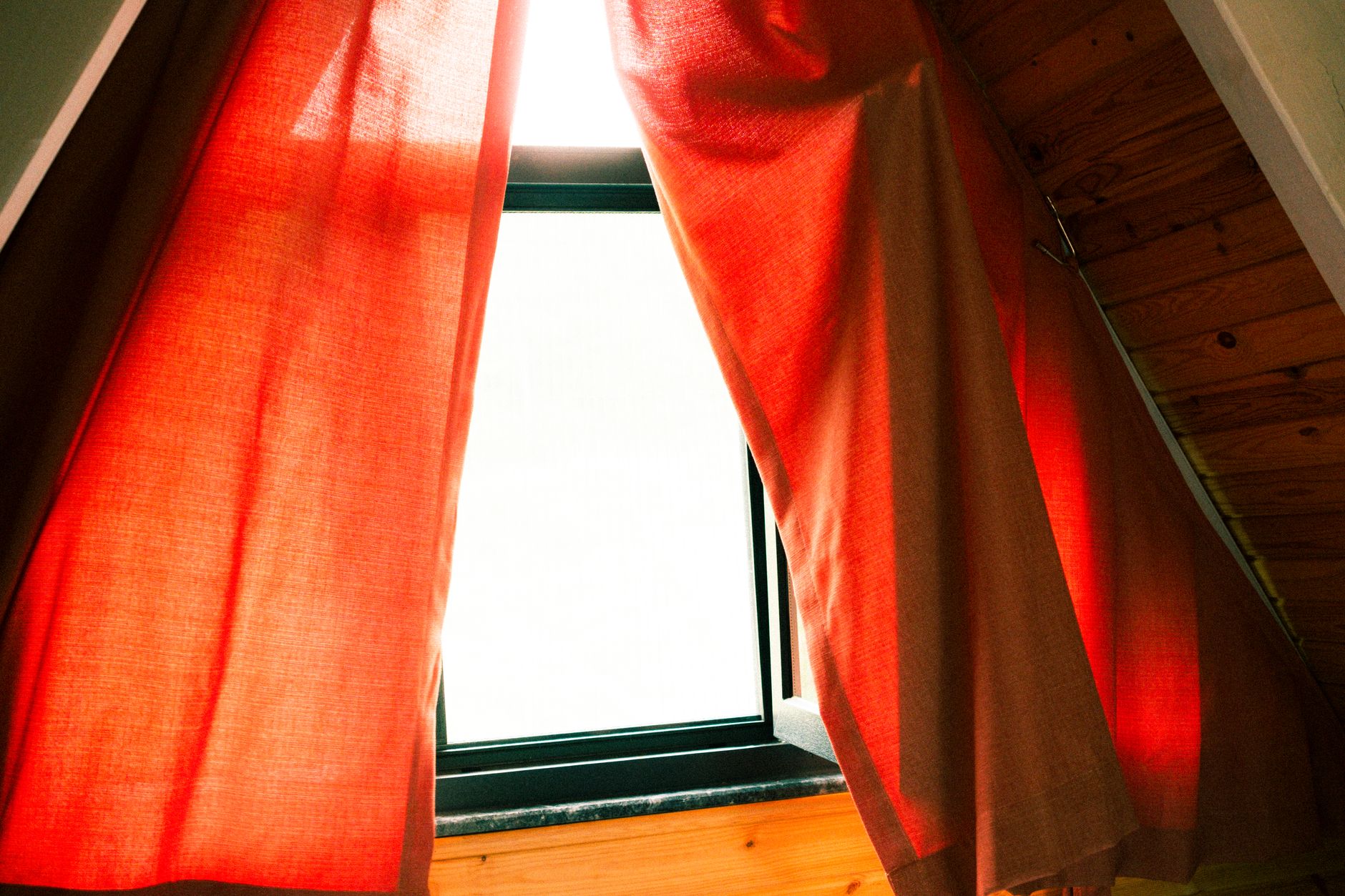 Photo by Zişan Özdemir on Pexels
Most stores sell curtain panels in five standard lengths:
- 63 inches: best for sill or apron length on smaller windows, or for windows set high on the wall.
- 84 inches: the most common size. It fits standard-height windows in rooms with 8-foot ceilings when the rod is mounted just above the frame.
- 96 inches: the sweet spot for 8-foot ceilings when you mount the rod high, closer to the ceiling. This is often the length that makes a room look instantly taller.
- 108 inches: suits 9-foot ceilings or taller windows.
- 120 inches: for 10-foot ceilings, two-story rooms, and dramatic floor-to-ceiling looks.
Don’t Forget Width
Length gets all the attention, but width matters just as much. A good rule of thumb is that the combined width of your panels should be 2 to 2.5 times the width of the window. Go narrower and your curtains will look flat and skimpy when closed. Go wider and they will look full, soft, and generous, even in an inexpensive fabric.
Standard vs. Custom
Off-the-shelf lengths work for most homes, especially with standard ceiling heights. If your drop falls between two sizes, buy the longer one and hem it. Custom curtains are worth the investment for unusually tall windows, arched tops, or rooms where you want a precise, tailored finish.
Where Curtains Should Hang: The 5 Length Styles
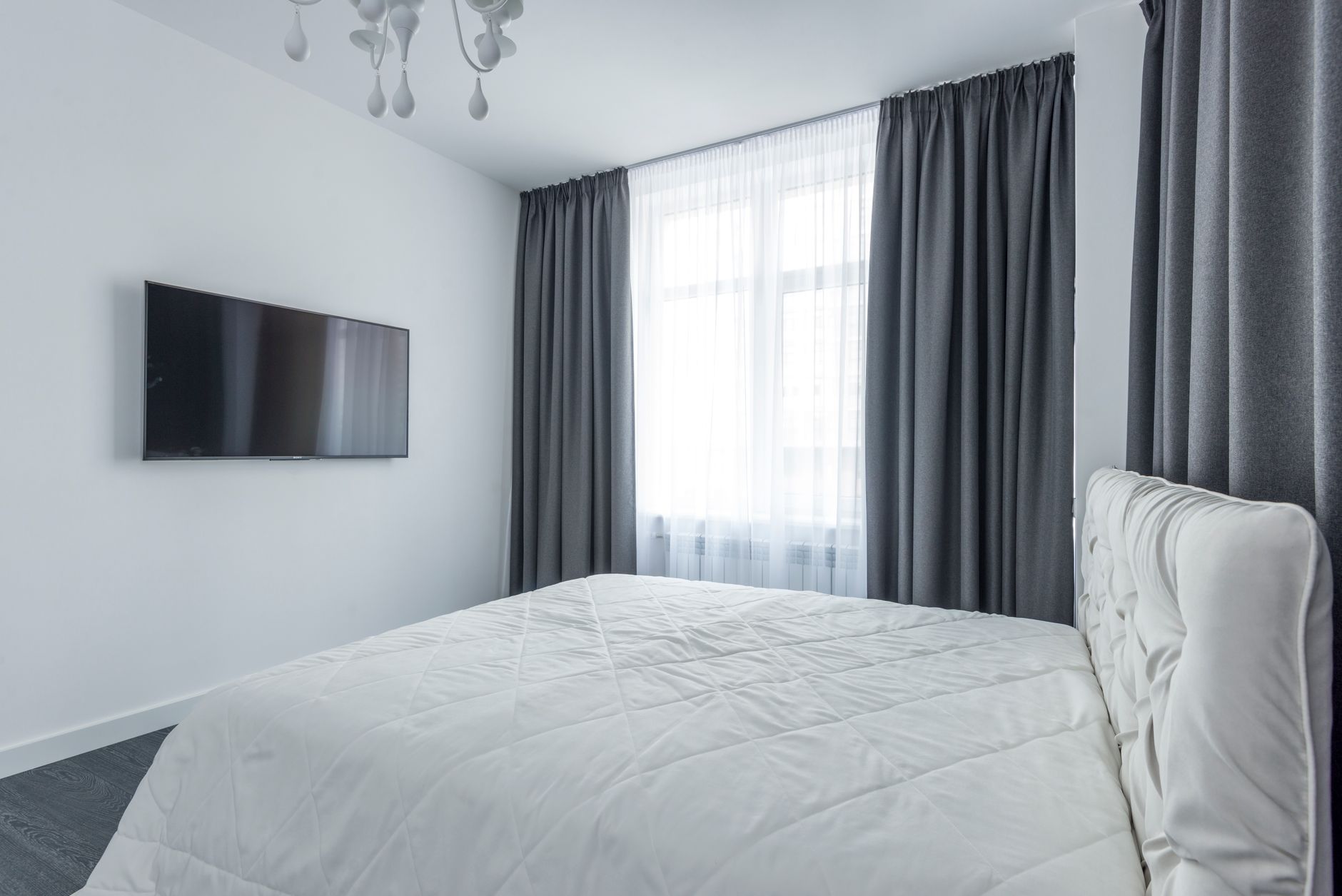 Photo by Max Vakhtbovych on Pexels
Each length style creates a different mood, so think about the feel you want before you measure.
Float or Kiss
Float means the hem sits about half an inch above the floor. Kiss means it just barely touches. Both look clean, modern, and intentional, and they are easy to vacuum around. This is the go-to style for most rooms.
Sill Length
The panel ends right at the windowsill. It reads casual and cottage-like, and it is practical for small windows, kitchens, and kids’ rooms.
Apron Length
The panel stops about 4 inches below the sill, covering the trim (the “apron”) under the window. It looks a bit more tidy and finished than sill length while still staying clear of whatever is below.
Floor Length
The fabric reaches right to the floor. It is classic and elegant, and it draws the eye up, which helps ceilings feel taller.
Puddle or Trouser
Extra fabric (usually 1 to 3 inches for a trouser break, 6 inches or more for a full puddle) pools on the floor. It feels formal and romantic, but it collects dust and pet hair and needs fluffing every time you open the curtains. Save it for rooms that are more for looking than living.
Hang the Rod High and Wide (Half the Battle)
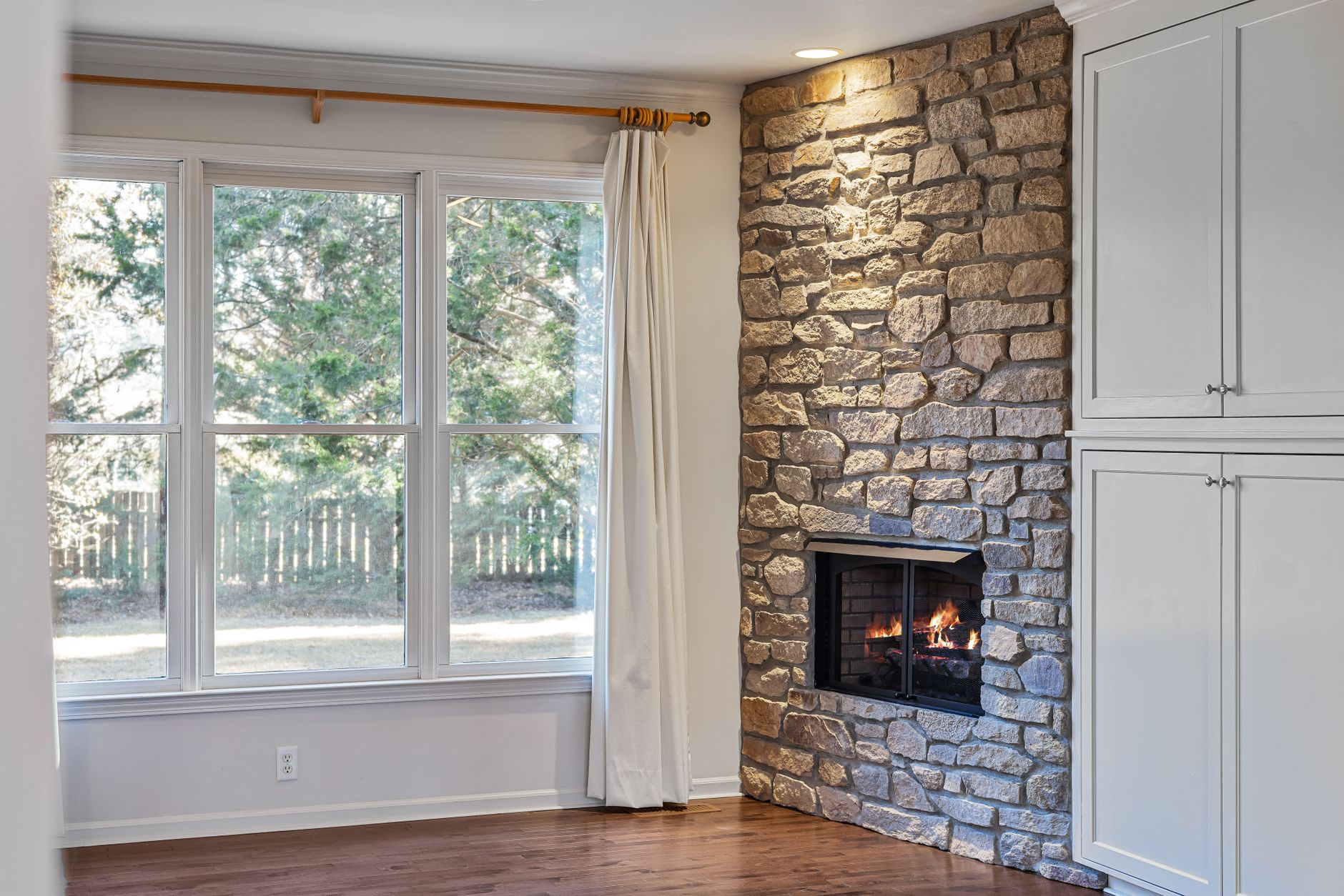 Photo by Curtis Adams on Pexels
Rod placement changes everything about curtain length. Mount the rod 4 to 6 inches above the window frame, or even closer to the ceiling, to make the window and room feel taller. Then extend the rod 6 to 12 inches past each side of the frame. That way the panels stack against the wall instead of blocking the glass, and the window looks wider and lets in more light.
This is why you should always measure from the rod, not the window frame. A rod mounted 6 inches higher can mean the difference between buying 84-inch and 96-inch panels. For the full installation process, including hardware and anchors, see our walkthrough on how to hang curtains step by step.
How to Measure for the Right Curtain Length
 Photo by Christina & Peter on Pexels
Grab a metal tape measure and a helper if you can. Then follow these steps.
- Decide your rod height first. Mark where the rod will go, or install the brackets, before measuring anything else.
- Measure from the rod to your target hem. Start at the point where the curtain will hang from (the top of the ring, hook, or rod) and measure down to where you want the hem to land: the floor, the sill, or 4 inches below the sill for apron length.
- Account for the header type. A rod pocket or grommet panel starts at the top of the rod, so measure from there. Rings and clip rings add an inch or two of drop, so measure from the bottom of the ring. Pinch pleat and back-tab styles vary by brand, so check the product details.
- Adjust for your style:
- Float: subtract about ½ inch from the rod-to-floor measurement.
- Kiss: use the exact measurement.
- Trouser break: add 1 to 3 inches.
- Puddle: add 6 to 8 inches.
- Measure each window separately. Floors and frames are rarely perfectly level, especially in older homes, so take measurements at both sides and in the middle of each window.
Tricky Spots: Radiators, Window Seats, Patio Doors and Furniture
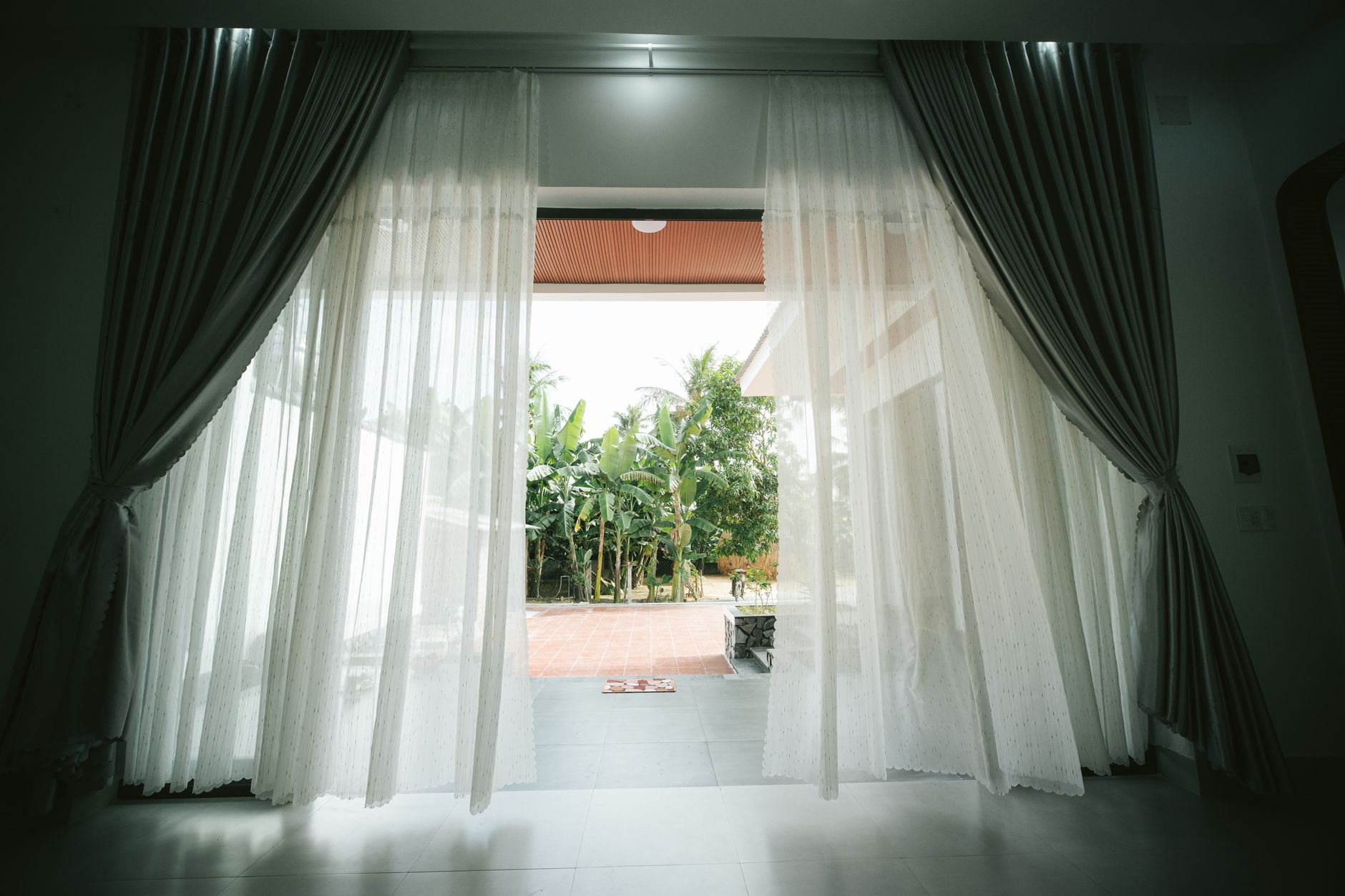 Photo by Pew Nguyen on Pexels
Standard guides skip these real-life situations, but they are exactly where most curtain-length mistakes happen.
Radiators and Heat Vents
Stop panels at sill or apron length. Floor-length fabric draped over a hot radiator is a fire risk, and it also traps heat against the window instead of letting it warm the room. Over a floor vent, a float or sill length keeps airflow moving.
Window Seats and Reading Nooks
Choose sill or apron length so the panels don’t bunch on the cushion or get sat on. If you want the softness of long curtains, mount floor-length panels on a wide rod that extends past the nook and frames it from the outside.
Sliding Patio and French Doors
Go floor-length with a float, so the hem clears the door track and doesn’t drag every time the door opens. Extend the rod well past the door frame so the panels stack completely clear of the opening and don’t get caught in traffic.
Curtains Over Furniture
When a sofa, bed, or console sits under the window, full floor-length panels can end up draped awkwardly behind it. Either pull the furniture a few inches forward and keep the float length, or choose a shorter apron length so the panels end cleanly above the piece.
Already Bought the Wrong Length? Easy Fixes
Before you return anything, try the cheapest fix first: adjust the rod before you touch the fabric. Raising or lowering a rod by a couple of inches often solves the problem completely.
If your curtains are too long:
- Use iron-on hem tape for a no-sew hem that takes about 15 minutes per panel.
- Do a quick straight-stitch hem on a sewing machine, or ask a local tailor (usually an inexpensive job).
- Raise the rod closer to the ceiling, which also makes the room feel taller.
- Lean into it with an intentional puddle, if the room suits a formal look.
If your curtains are too short:
- Switch to clip rings or drop rings, which can add 1 to 3 inches of drop.
- Lower the rod slightly, as long as it still sits above the window frame.
- Sew a band of contrast fabric along the hem for a designer-style color block.
Common Curtain Length Mistakes to Avoid
- Hanging the rod right at the frame. It shortens the window visually and makes ceilings feel low.
- Panels that stop between the sill and the floor. This “high-water” look always reads as a mistake. Pick a clear stopping point: sill, apron, or floor.
- Panels that are too narrow. If they can’t close fully or look flat when drawn, you need more width, not more length.
- Buying before measuring the real drop. Always install or mark the rod first and measure from there.
Frequently Asked Questions
What is the most common curtain length?
84 inches is the most common curtain length. It fits standard-height windows in most living rooms and bedrooms when the rod is mounted just above the frame. If you mount the rod higher on an 8-foot ceiling, 96 inches is often the better fit.
Should curtains touch the floor?
In most rooms, yes. A kiss (just touching) or a float (about half an inch above) looks polished and is easy to clean around. Puddling is optional and works best in formal spaces.
How much longer than the window should curtains be?
Measure from the mounted rod, not the window frame. Buy the length that reaches your target hem, whether that is the floor, the sill, or just below it. For floor-length curtains, that is often 20 inches or more past the bottom of the window.
How high above the window should I hang the curtain rod?
Hang the rod about 4 to 6 inches above the window frame. For a taller, more dramatic look, mount it closer to the ceiling. Just remember to measure your curtain length from the new rod height.
What are the standard curtain lengths?
The standard lengths are 63, 84, 96, 108, and 120 inches. Choose based on your ceiling height, rod placement, and where you want the hem to land.
Is it better to have curtains too long or too short?
Slightly too long is far better. You can hem long curtains, raise the rod, or let them puddle. Curtains that are too short almost always look like a mistake.
What curtain length looks best with a radiator or window seat under the window?
Sill or apron length works best, so the panels stop above the obstruction. Never let fabric drape over a hot radiator, since it is a fire risk and blocks heat from reaching the room.
How do I fix curtains that are too long or too short?
For curtains that are too long, use iron-on hem tape, a quick sewn hem, or raise the rod. For curtains that are too short, add clip or drop rings, lower the rod slightly, or sew a contrast band onto the hem.
Get the Length Right and Everything Else Follows
Curtain length does more for a room than almost any other window detail. Mount the rod high and wide, measure from the rod down, and choose a hem style that suits how you actually use the space. Do that, and even affordable panels will look tailored and intentional.
Ready to go further? Our complete guide to window treatments covers every option for every room, and you can find more simple room-refresh ideas in our Decorating section. For more quick wins delivered to your inbox, sign up for the Easy Home Updates newsletter.


