
Wall Shelf Decor Ideas: How to Style Shelves So They Look Curated, Not Cluttered
You mounted the shelves. You liked the idea of them, styled and photogenic, holding a little curated world of books and plants and pretty objects. Then you actually put things on them, and now they look either bare and awkward or like a junk drawer with a view. If that’s you, the problem isn’t your taste. It’s that nobody ever taught you the method. Good wall shelf decor follows a handful of repeatable rules, not some innate eye for design, and once you know them you can style any shelf in the house in about fifteen minutes. Here’s the formula, a full menu of what to put up there, and room-by-room ideas that actually work.
The One Rule That Fixes Most Shelves: The 30/70 Balance
If you remember nothing else, remember this ratio: fill roughly 30% of a shelf with objects and leave about 70% open as breathing room. Clutter, not bad taste, is the number one reason shelves look “off.” When every inch is covered, the eye has nowhere to rest and the whole thing reads as storage rather than decor.
Negative space is what makes a shelf look designed on purpose. A shelf that’s two-thirds empty photographs like a magazine spread; a shelf that’s packed edge to edge photographs like a garage sale. Before you add one more item, ask whether the shelf still has room to breathe. If it doesn’t, take something off before you put anything else on.
A Simple Method for Styling Any Wall Shelf (Step by Step)
 Photo by kaboompics.com on Pexels
Once the 30/70 ratio is in your head, styling becomes mechanical. Work through these five steps on each shelf, in order.
Step 1: Anchor with a large piece first. Start with the biggest item, a framed print or small mirror leaned against the wall, a large vase, or a substantial stack of books. This becomes the visual weight everything else is arranged around, so place it before anything smaller.
Step 2: Build in odd-numbered groupings. Cluster items in ones and threes rather than pairs. A trio of objects at slightly different heights reads as an intentional vignette; two identical objects lined up reads as a display case. If you’re working with a set of matching pieces, break it up, put two on one shelf and one elsewhere.
Step 3: Vary height and create implied diagonals. Picture a loose “X” or zigzag running across your shelves and place taller items along that line, with shorter ones filling the gaps. Never stack the tallest object on the shelf directly above another tall object; it flattens the whole arrangement and kills the sense of depth.
Step 4: Layer front-to-back for depth. Put taller pieces toward the back wall and shorter ones in front, using a stack of books or a small riser as a pedestal to lift smaller objects. This layering is what separates a shelf that looks styled from one that looks lined up.
Step 5: Run the step-back test. Walk to the other side of the room, or take a photo with your phone, and look at the shelf with fresh eyes. Squinting or viewing it through a camera flattens the scene and makes lopsided groupings or awkward gaps obvious in a way that standing right in front of the shelf never does. Adjust until nothing jumps out as too heavy, too empty, or too matched.
What to Actually Put on Your Shelves (The Decor Menu)
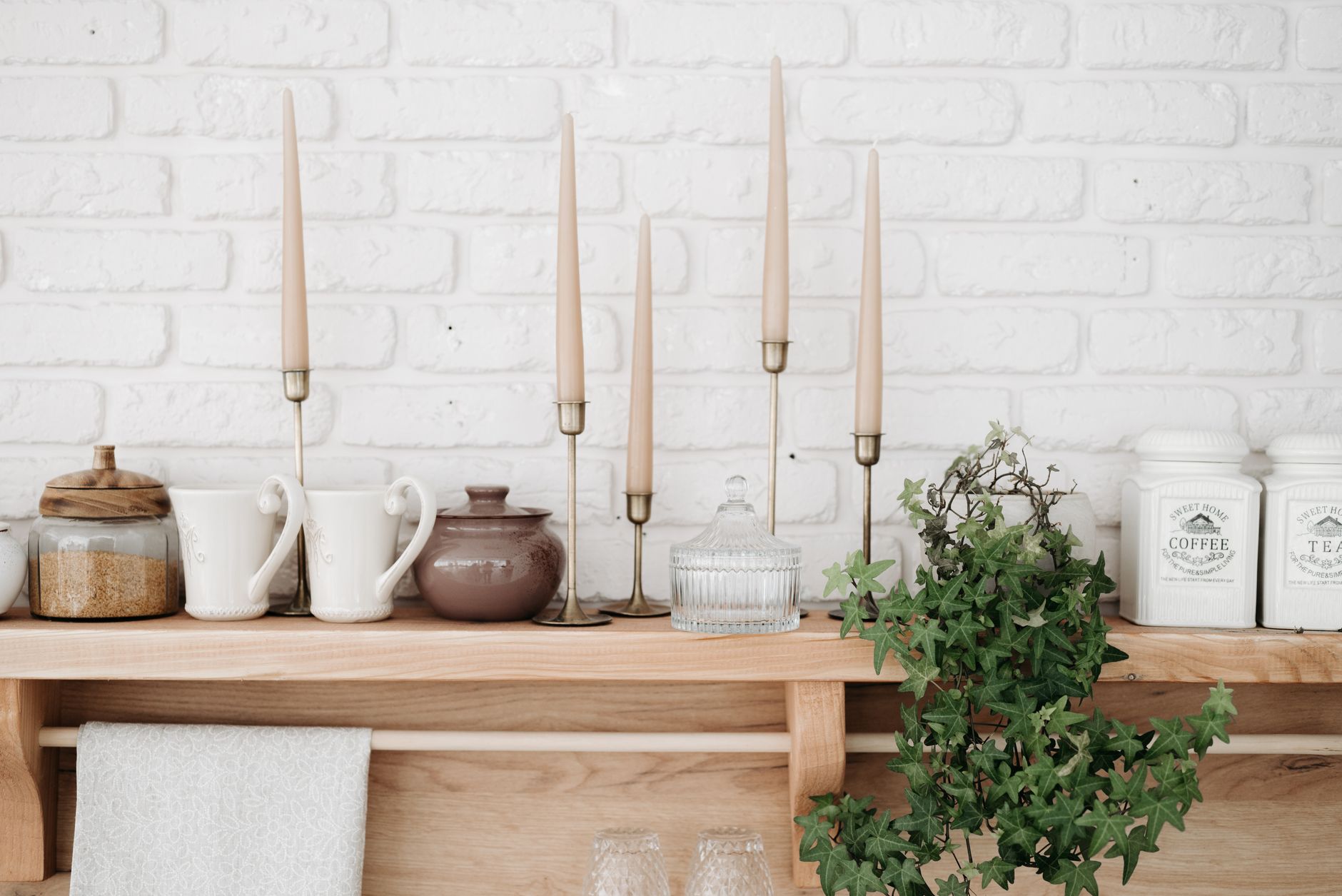 Photo by Pavel Danilyuk on Pexels
If you’re staring at empty shelves wondering what actually goes on them, pull from this list and mix categories rather than filling a shelf with one type of object.
- Books. Stack most of them horizontally in groups of three to six, with one or two standing upright as bookends for the stack. Keep the color palette curated, turn spines in for a monochrome look or covers out when you want a pop of color.
- Greenery. A trailing pothos or faux ivy draped over the shelf edge breaks up the hard horizontal line and adds the one element every styled shelf needs: something soft and alive-looking.
- Vases, bowls, and vessels. Mix materials, a ceramic vase next to a glass bowl next to something in wood or stone, so the shelf doesn’t feel like a matched set from one store.
- Candles and candlesticks. These add height variation cheaply and bring warmth, especially useful when you need a small, tall item to fill a gap between two larger pieces.
- Baskets and boxes. A small woven basket adds texture and doubles as hidden storage for the odds and ends that would otherwise clutter the shelf.
- Framed art and small mirrors. Leaning a piece of art or a mirror against the back wall of the shelf, rather than hanging it, instantly adds depth and a sense of layering.
- Personal and sculptural objects. A travel souvenir, a piece of pottery, a found stone, whatever makes the shelf feel like yours instead of a showroom. One or two of these per shelf is plenty.
Mixing Color, Texture, and Materials (Without It Getting Busy)
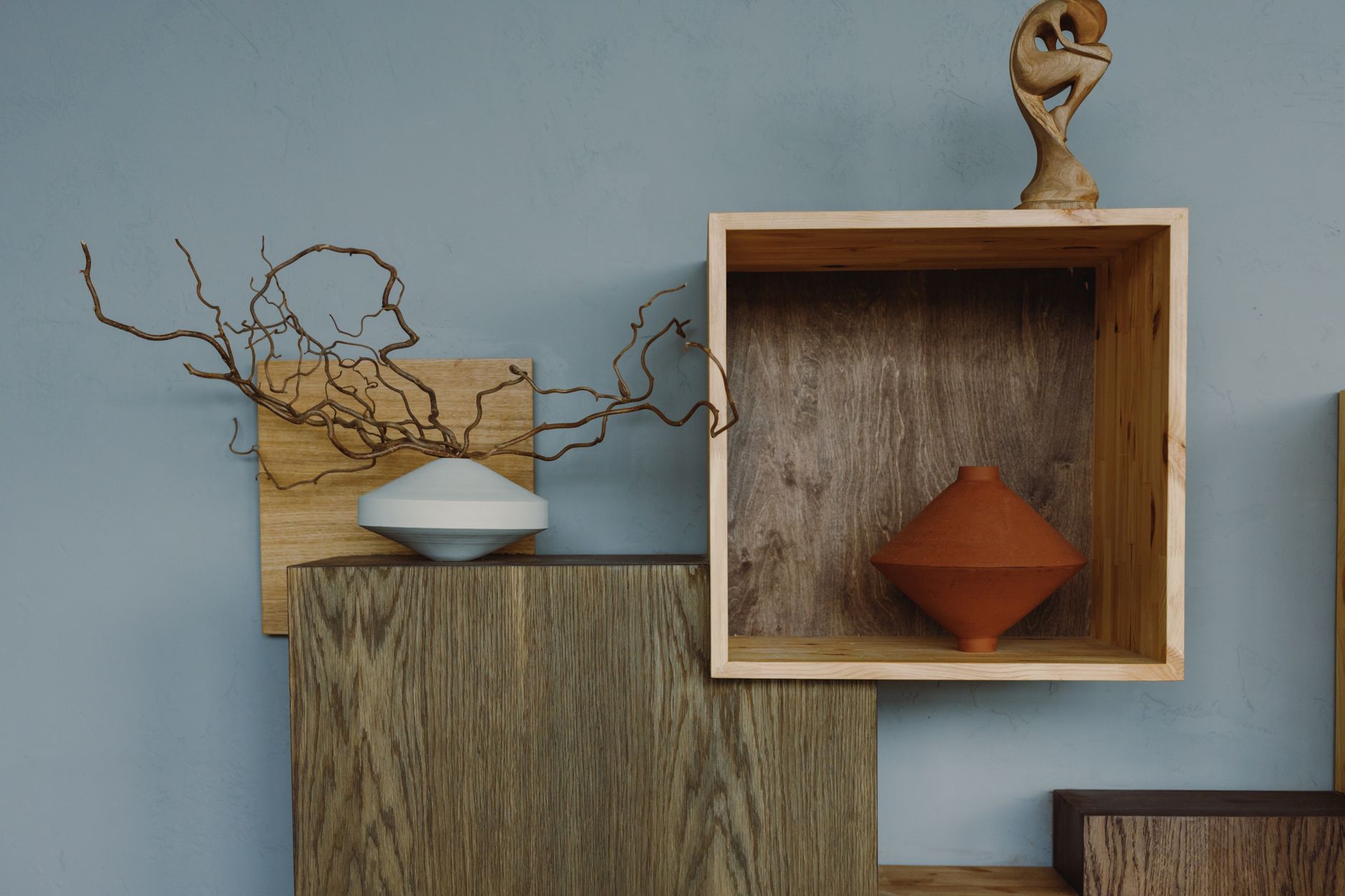 Photo by Ron Lach on Pexels
Keep your palette to two or three core colors that echo something already in the room, then allow yourself one intentional pop of color to keep things from feeling flat. A shelf where every object is beige can look just as tired as one that’s a riot of mismatched color.
Remember that balance is not the same thing as symmetry. You’re aiming for objects that carry roughly equal visual weight on each side of the shelf, not mirror-image matching. A tall, slim vase can balance a short, wide bowl if the two feel similarly substantial. Finally, combine textures deliberately: pair something hard and matte (stone, wood) with something shiny (glass, brass), and something geometric with something organic. That contrast is what keeps a shelf interesting up close, not just from across the room.
Room-by-Room Wall Shelf Decor Ideas
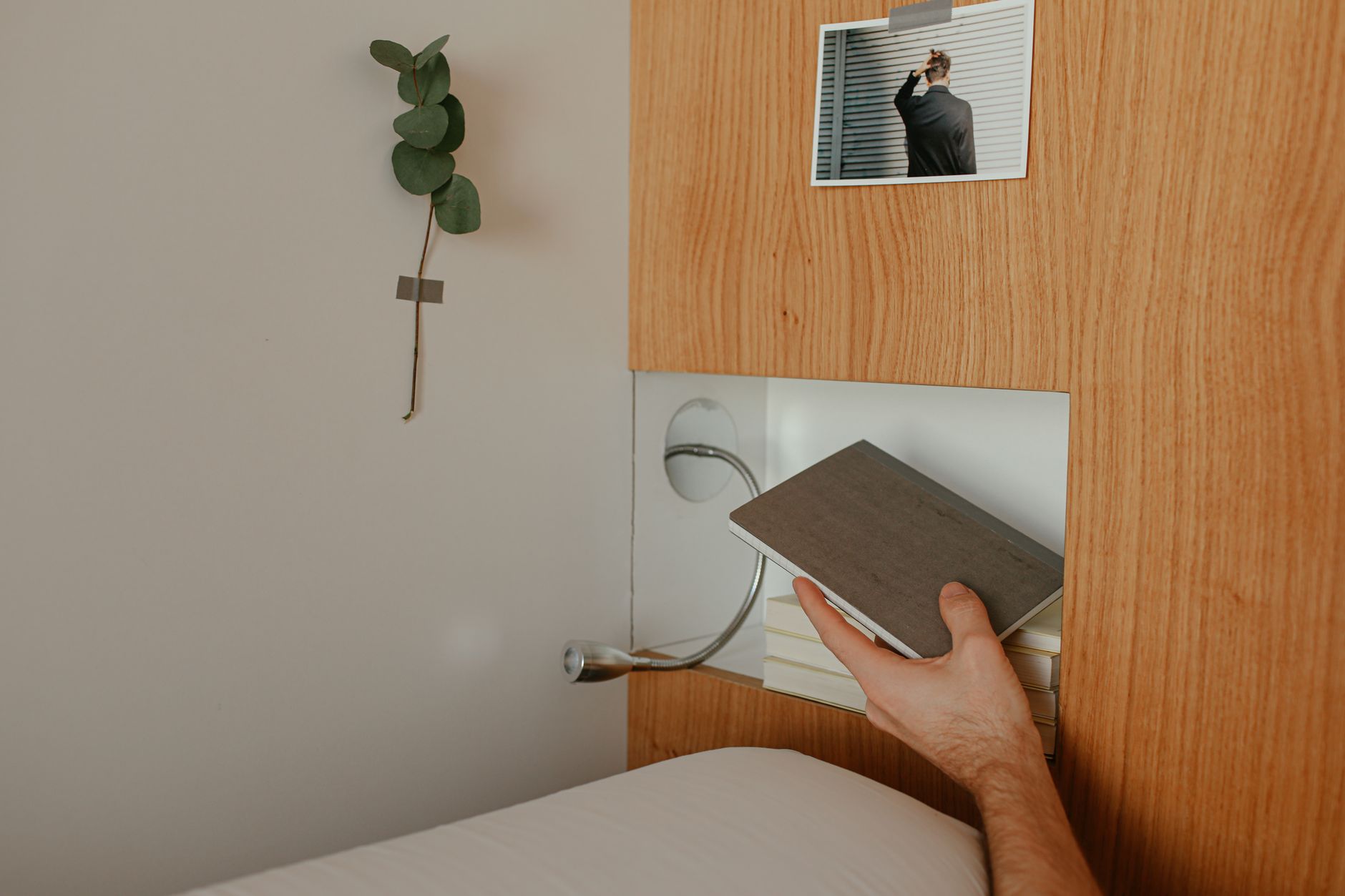 Photo by Cup of Couple on Pexels
Shelf styling isn’t one-size-fits-all. What works over a kitchen counter would look strange in a bathroom, so adjust the approach to the room.
Living room. This is the display shelf, so lean into it. Build a display-forward vignette with a small sculpture, a stack of design books, and a piece of leaned art you can swap out seasonally.
Kitchen. Keep it functional but pretty: a stack of your nicest plates, a wood cutting board leaned on edge, glass jars of pasta or grains, and a small potted herb for a bit of green near the stove.
Bathroom. Choose moisture-tolerant pieces: neatly rolled towels, apothecary-style glass jars for cotton balls or bath salts, a single candle, and a low-water plant like a pothos that tolerates humidity and low light.
Bedroom. Dial the palette down and keep it calm: a small stack of books you’re actually reading, a low lamp, one or two framed photos, and very little else. A bedroom shelf should feel restful, not busy.
Entryway or home office. This shelf earns its keep as a catch-all: a shallow tray for keys and mail, a woven basket for gloves or cables, a plant, and one personal object that makes the space feel like more than a drop zone.
Style Shelves With What You Already Own
Before you buy a single new item, shop your own house first. Walk through every room and pull anything that might work, a vase from the dining room, a stack of books from the nightstand, a bowl from a closet shelf, and lay it all out near the shelf you’re styling. You’ll almost always find you own more good material than you thought.
Once you’ve gathered options, editing matters more than adding. Remove one thing before you introduce another, and keep asking whether each piece is earning its spot. If you do need to fill gaps, cheap, high-impact options include thrifted vases and hardcover books, dollar-store frames spray-painted a single color, foraged branches in a simple vase, and realistic faux stems that won’t wilt in a low-light corner.
Don’t Skip the Practical Prep
A beautifully styled shelf that ends up on the floor isn’t a win, so handle the practical side before you get precious about the arrangement. Check the shelf’s weight limit and use anchors rated for the wall type and the load you’re planning to hang, especially with heavier items like stacked books or ceramic vessels.
Use museum putty, earthquake gel, or felt pads under anything top-heavy or breakable, both to keep pieces from sliding and to protect curious kids or pets from a shelf that tips too easily. Finally, pay attention to shelf depth: deep shelves (8 inches or more) can handle the front-to-back layering described above, while shallow ledges of 4 inches or less are really built for leaning art rather than stacking objects.
Frequently Asked Questions
How do I decorate a wall shelf so it doesn’t look cluttered?
Fill about 30% of the shelf and leave roughly 70% open as negative space. Then group objects in odd numbers, ones and threes, with visible gaps between each grouping rather than spreading items evenly across the whole shelf.
What should I put on wall shelves?
A curated mix works best: a few books, a plant, a vase or bowl, a candle, a small basket, and one or two personal or sculptural pieces. Vary the height and material of each item rather than choosing a matched set.
How do I style shelves of different heights and sizes?
Anchor each shelf with one larger piece, then arrange the rest so similar-height items aren’t stacked directly on top of one another. Picture an implied diagonal or zigzag running across the shelves and place your tallest pieces along that line.
How many items should go on one shelf?
As a rough guide, plan for one grouping per 12 to 30 inches of shelf width. A narrow shelf might hold a single centered vignette, while a wider shelf can support two or three separate groupings with negative space between them.
How do I decorate floating shelves without books?
Lean a piece of framed art or a small mirror against the back wall, then add a plant, a vase or two, a candle, and a small basket. Use risers to add height variation in place of the stack a book pile would normally provide.
Should shelf decor be symmetrical?
No. Aim for balanced visual weight rather than mirror-image symmetry; a tall, slim object can balance a short, wide one as long as they feel similarly substantial. Asymmetrical arrangements generally read as more intentional and less staged than perfectly matched ones.
How do I keep shelf decor from being knocked over?
Respect the shelf’s stated weight limit and install it with anchors rated for both the wall type and the load. Secure top-heavy or breakable pieces with museum putty, earthquake gel, or felt pads so they don’t slide or tip.
How do I style shelves on a budget?
Shop your own house first, pulling candidates from other rooms before buying anything new. Fill any remaining gaps with thrifted books and vases, dollar-store frames, and faux or foraged greenery, which cost little but add real texture and height.
Bring It All Together
Good wall shelf decor really does come down to a method: leave more space than you fill, anchor with something big, group in odd numbers, vary the height, and edit ruthlessly before you add anything new. Run through the five steps on one shelf at a time, and don’t be afraid to swap pieces in and out as the seasons or your mood changes; that’s half the fun of open shelving.
If you’re tackling more than one wall in the room, our broader wall decor ideas guide covers other blank-wall solutions beyond shelving, and the home styling guide walks through pulling a whole room together once your shelves are done. And if leaning art against the shelf wall has you eyeing a bigger art moment, our DIY gallery wall guide is the natural next stop. For more room-by-room refreshes like this one, subscribe to our newsletter and we’ll send new ideas straight to your inbox.


