
Paver Patio Ideas: Layouts, Patterns, and Materials
The best paver patio ideas have less to do with budget than most people assume. Two patios can use the same $4-per-square-foot concrete paver and land in completely different places: one reads like a hand-laid stone terrace, the other like a gray parking pad. The difference is almost always the pattern, the border, and the shape of the layout, not the price on the pallet.
This guide covers the patterns that actually work and where each one shines, layouts matched to real yard shapes, what each material costs and wears like, and how to match a combination to your traffic and climate. Plus the part inspiration galleries skip: what goes underneath, which decides whether your patio still looks good in year ten.
Popular Paver Patterns (and Where Each One Shines)
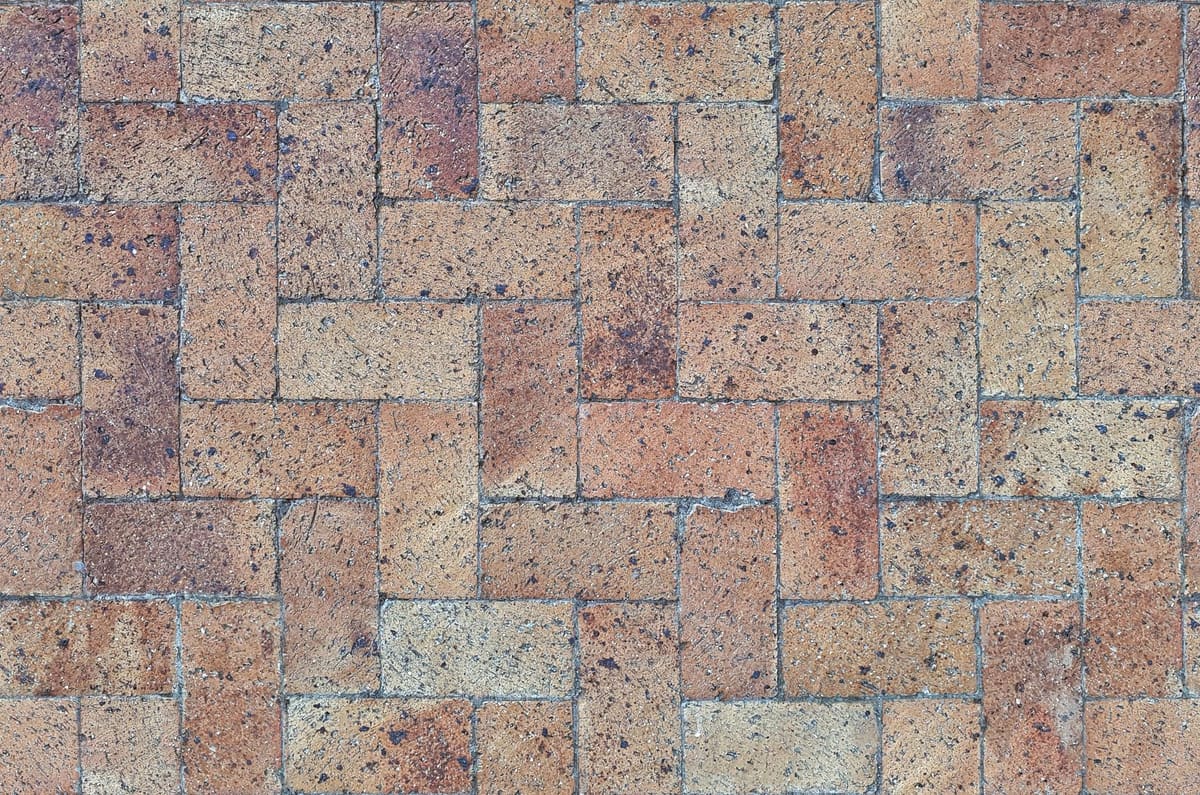 Photo by TXTR on Pexels
Pattern is the cheapest design upgrade you have. It costs nothing extra in materials and changes the entire character of the surface.
Running Bond
Rectangular pavers offset by half a paver each row, like a brick wall laid flat. It’s the simplest pattern to cut and lay, produces the least waste, and is the friendliest option for a first-timer. Running the rows across the narrow dimension of a long, skinny patio visually widens it, which makes this a quiet workhorse for side yards.
Herringbone
Pavers set at 45 or 90 degrees in an interlocking zigzag. It’s the strongest pattern you can lay because no continuous joint runs through the field, so loads spread sideways instead of pushing pavers apart. That’s why it’s standard for driveways and any patio connected to one. It looks expensive, costs the same in materials as running bond, and asks for more edge cuts.
Basketweave
Pairs of rectangular pavers alternating horizontal and vertical, like a woven mat. It has an old-world, cottage-garden feel that suits brick and tumbled concrete, and its repeating square module is forgiving to lay out. It’s weaker than herringbone under vehicle loads, so keep it to foot-traffic areas.
Stack Bond and Grid
Pavers aligned in straight rows and columns, joints lining up both directions. The modern choice: clean and quiet, at its best with large-format pavers (12x24 or 24x24) in porcelain or smooth concrete. The catch is that it’s the least interlocked pattern and shows every imperfection, so a dead-flat base and precise edge restraint are non-negotiable.
Fan, Circular, and Pinwheel
Radiating or rotating patterns that create an obvious center. Use them as a feature rather than a whole field: a circular kit under a fire pit, a pinwheel medallion where walkways meet. Most manufacturers sell circle kits with pre-tapered pavers so you’re not cutting wedges by hand, which is worth every penny.
Layout Ideas by Yard Type and Use
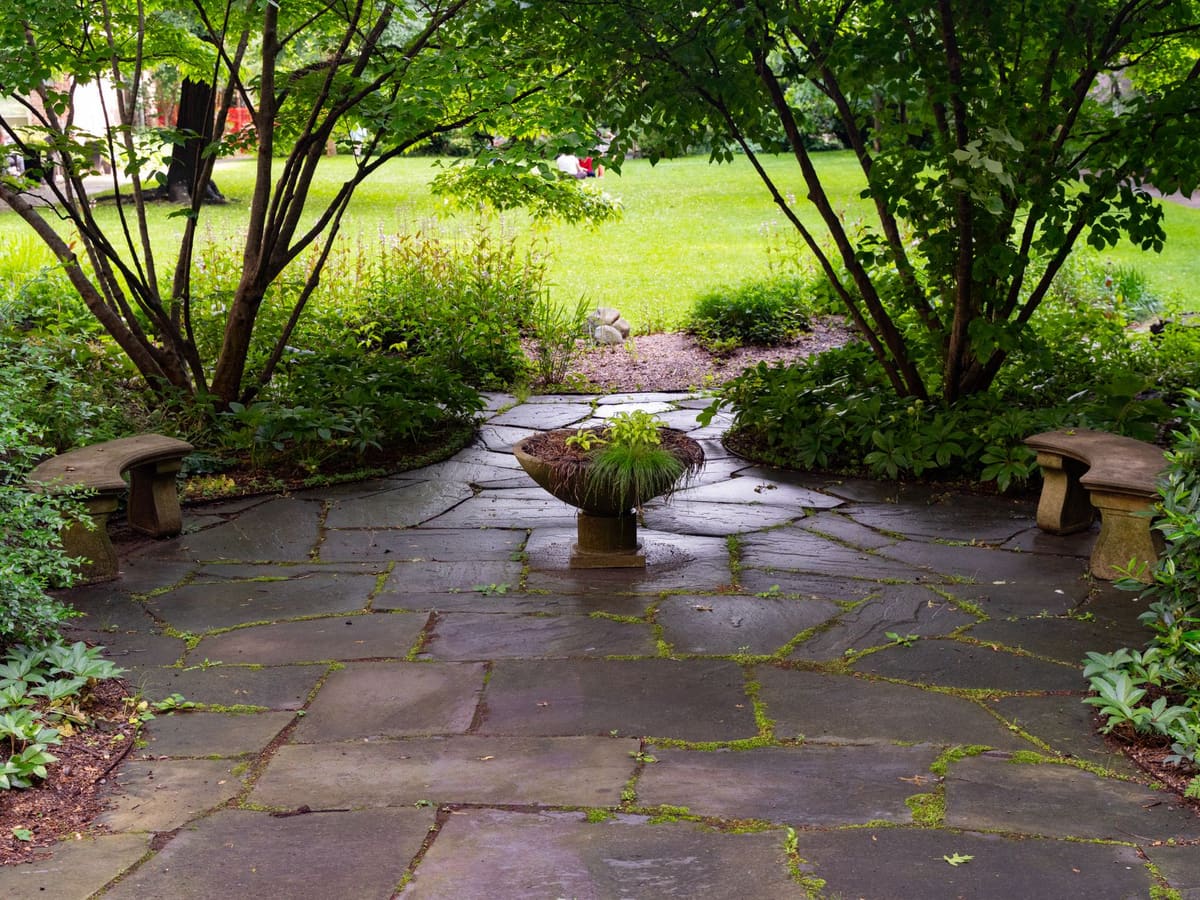 Photo by Brett A on Pexels
Once you have a pattern in mind, shape the patio to the yard you actually have.
Small backyards and narrow side yards. Resist the urge to fill the space wall-to-wall. A patio that runs the long dimension with a soft curve on one corner reads bigger than a full rectangle. Use a smaller paver format (4x8 or 6x6) so the scale matches, keep the field one color, and skip a heavy contrasting border, which shrinks a small area by drawing a hard box around it.
Multi-zone layouts. Over about 300 square feet, one uninterrupted field gets monotonous. Separate a dining zone from a lounge zone by changing pattern between them (herringbone under the table, running bond in the seating area) or by running a two-paver-wide soldier course band between them. It costs nothing extra and does the work an outdoor rug would otherwise have to do.
Tiered and sunken patios for slopes. A sloped yard isn’t a problem to flatten, it’s a chance to build two usable rooms. Cut a lower terrace into the grade for a fire pit, hold the soil with a segmental retaining wall from the same paver line, and connect the levels with wide steps. The wall doubles as seating if you cap it at 18 inches.
Freeform and organic edges. Irregular flagstone or tumbled pavers let you lay a patio with no straight lines at all, meandering around a tree or following a planting bed. It’s the most forgiving layout for a yard where nothing is square, and joints planted with creeping thyme soften it further. Budget 15 to 20 percent cutting waste instead of the usual 10.
For more on shaping the space around the paving itself, our complete guide to patio design covers furniture zones, shade, and privacy planting.
Choosing a Paver Material
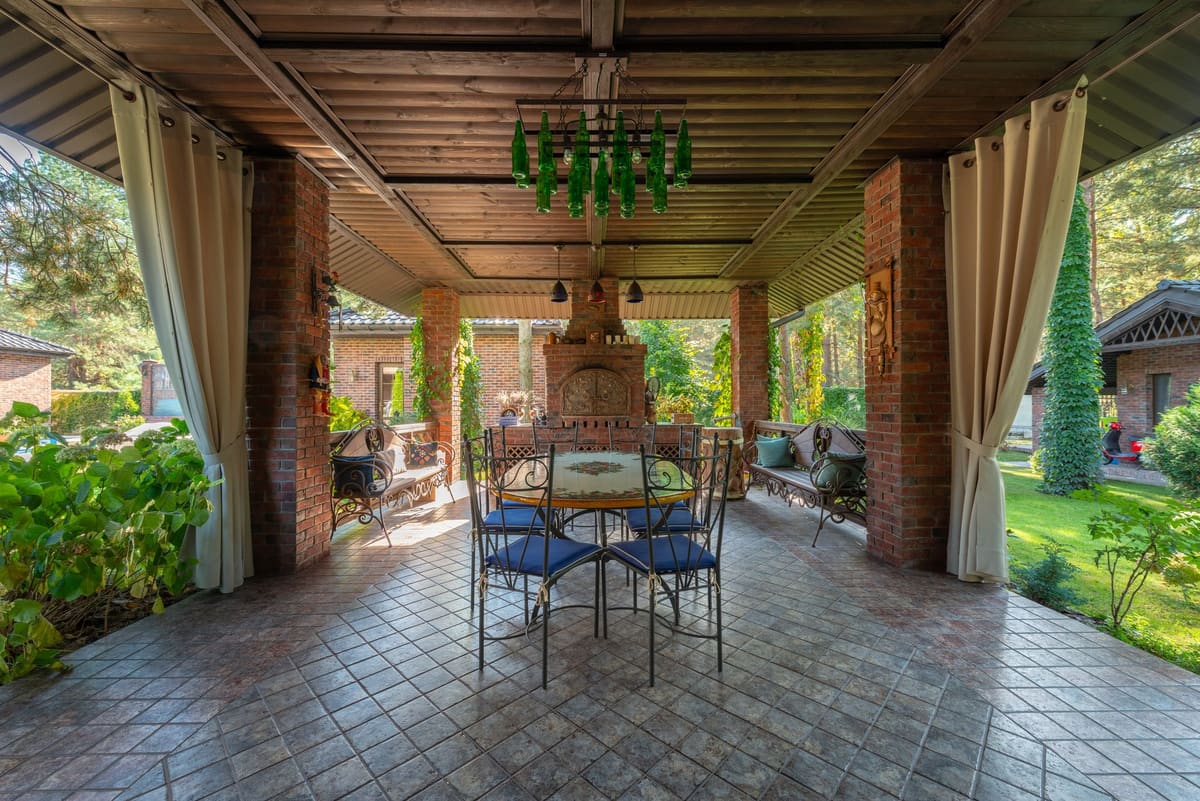 Photo by Max Vakhtbovych on Pexels
Concrete pavers are the default for good reason: roughly $3 to $8 per square foot in materials, every shape, color, and texture including convincing stone and wood-plank lookalikes, and consistent thickness that makes them the easiest material to lay level. The trade-off is that pigments fade somewhat over a decade of UV exposure, most visibly in deep charcoals and reds.
Natural stone (bluestone, flagstone, travertine, granite) brings variation concrete can only imitate, and it ages instead of fading. Expect $10 to $30 per square foot in materials, plus higher labor when thickness is irregular. Travertine is the standout for pool decks: porous, cooler underfoot than most stone, good wet slip resistance. Granite is the most durable and priciest.
Brick instantly suits a Colonial, Federal, or Craftsman house. True clay brick pavers keep their color permanently because it’s fired all the way through rather than applied as surface pigment. They’re small, so laying takes longer, and they suit running bond, basketweave, and herringbone best.
Porcelain pavers are the newest and lowest-maintenance category: extremely dense, almost no water absorption, stain and moss resistant, hose-clean. Large formats with very consistent dimensions make them ideal for the modern grid look. Upfront cost is high ($10 to $20 per square foot) and they need a wet saw with a diamond blade to cut.
Two comparisons worth keeping in mind: light-colored concrete and travertine stay the most comfortable barefoot, while dark granite and charcoal concrete get genuinely uncomfortable on a hot afternoon. And textured or tumbled surfaces beat polished ones for slip resistance, so any porcelain used outdoors should be spec’d as an exterior, high-slip-rating product.
How to Match Pattern and Material to Your Yard
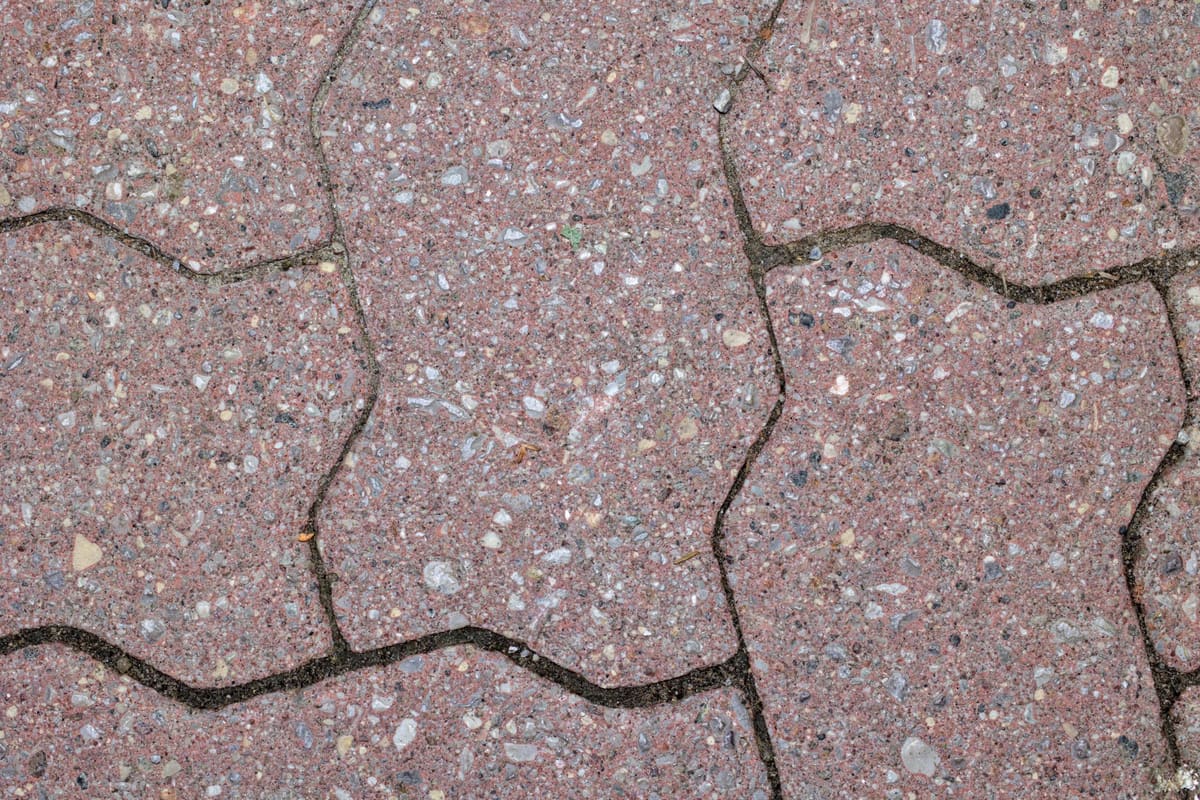 Photo by Ghost Acolyte on Pexels
Here’s the framework the inspiration galleries never give you. Four questions, in order.
1. Budget tier. At roughly $10 per square foot DIY or $15 to $25 installed by a pro, concrete pavers in running bond or herringbone are the answer. Upgrading the pattern is free and upgrading the material is not, so spend your first dollars on a better pattern and a soldier-course border before stone.
2. Traffic. Foot traffic only? Any pattern works. A patio that doubles as a turnaround, takes a heavy grill cart, or connects to the driveway? Use herringbone and pavers at least 2 3/8 inches (60 mm) thick, since stack bond and basketweave creep under repeated wheel loads.
3. Climate. In freeze-thaw regions, drainage is the whole game. Slope the finished surface about 1/4 inch per foot away from the house, use polymeric sand in the joints, and give the base extra depth. Dense, low-absorption pavers tolerate freeze cycles far better than soft, porous stone.
4. DIY versus pro. Running bond or basketweave on a small square patio is a realistic weekend project. Circles, sunken terraces, retaining walls, and anything over 400 square feet involve serious excavation and compaction, which is where a pro earns the fee. If you’re doing it yourself, laying a paver patio step by step is worth reading before you rent the plate compactor.
The Base Matters More Than the Pattern
A gorgeous herringbone field on a bad base is a wavy, weed-filled mess in three winters. A plain running bond on a proper base is still flat in twenty years. The Concrete Masonry and Hardscapes Association’s technical specification for interlocking concrete pavements sets the numbers worth building to: roughly 4 to 6 inches of compacted aggregate base for pedestrian patios (deeper in cold climates or poor soil), compacted in lifts to about 98 percent standard Proctor density, and a screeded bedding sand layer a nominal 1 inch thick, never thicker and never used to level out a lumpy base. Add rigid edge restraint around the whole perimeter, or the outer courses migrate and the field loosens.
When Permeable Pavers Make Sense
If your yard pools after rain, your patio sits at the bottom of a slope, or your municipality regulates impervious surface coverage, permeable pavers earn the extra cost. Wider aggregate-filled joints over an open-graded stone reservoir let rainfall infiltrate instead of sheeting off. The EPA’s overview of permeable pavement notes these systems reduce stormwater runoff and filter pollutants as water passes through, which is why they show up in local stormwater credit programs. They do need a deeper reservoir, clean open-graded aggregate, and periodic vacuuming so the joints don’t clog with silt.
Design Add-Ons That Elevate a Paver Patio
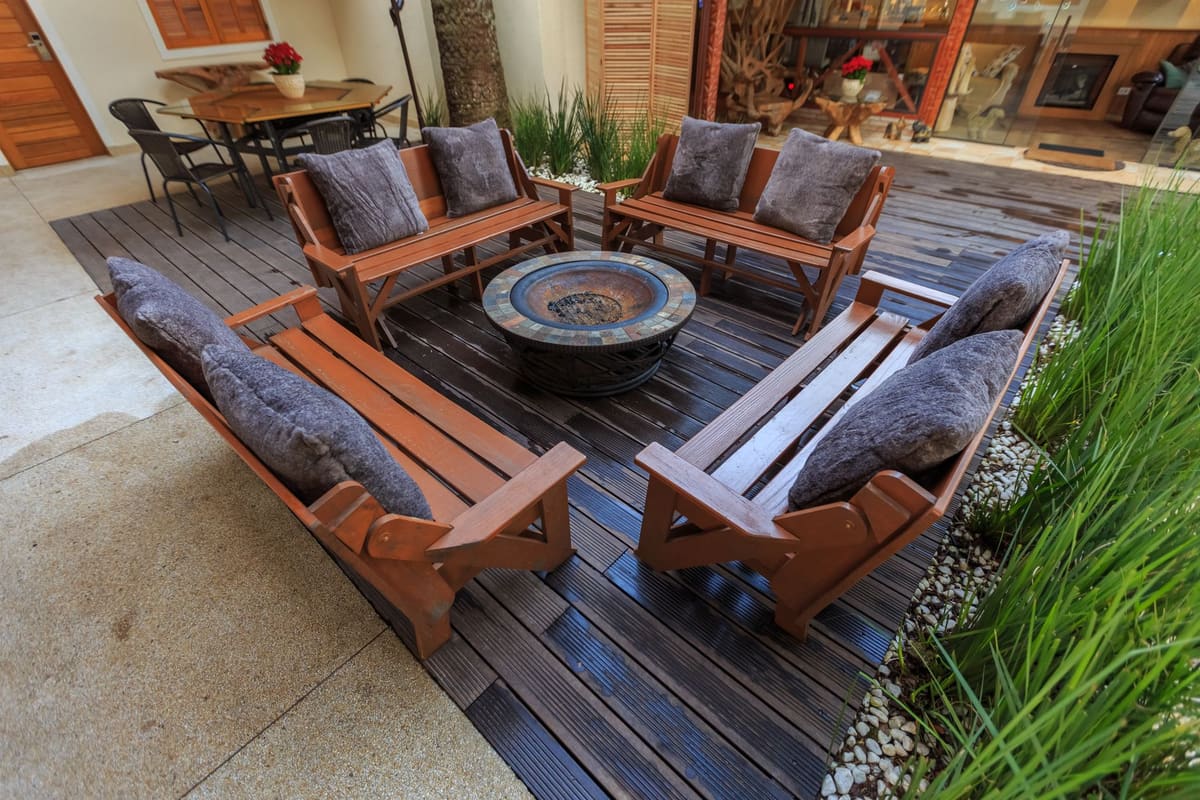 Photo by Matheus Bertelli on Pexels
- A fire pit anchors the patio and adds two months to either end of the season. Build it into a circular or pinwheel medallion so the pattern announces the feature.
- A seating wall at 18 inches high gives permanent overflow seating and defines the patio edge without a fence.
- A pergola or shade sail turns a patio into a room. Set post footings before you pave, not after, and cut pavers around the posts.
- Lighting does more at night than any other add-on: low-voltage path lights along the border, hardscape lights recessed into a seating wall, warm string lights overhead.
- A soldier course border, a single row of pavers laid perpendicular around the perimeter, is the highest-return detail available. It frames the field, hides cut edges, and makes a basic concrete paver look deliberate. Keep any contrasting band to one accent color, since two competing borders read as busy.
If the bones of your patio are fine and you’re just tired of how it looks, refreshing the patio you already have with new joint sand, a border, and better lighting costs a fraction of a rebuild.
Frequently Asked Questions
What is the most popular paver patio pattern?
Herringbone tops most lists because it looks custom and holds up better than anything else under traffic. Running bond and basketweave are the runners-up, and both are friendlier to DIYers thanks to fewer angled cuts. Plenty of great patios combine the two: running bond in the field, herringbone or a soldier course as the accent.
What is the best paver pattern for high-traffic areas?
Herringbone, specifically the 45-degree version. With no joint line running continuously through the field, each paver is locked by its neighbors and loads distribute sideways instead of shoving pavers apart. Stack bond and fan patterns are weakest under repeated load and belong in light foot-traffic areas.
What’s the best material for a paver patio?
It depends what you’re optimizing for. Concrete gives the best value and the widest range of colors and shapes, natural stone gives a premium organic look and the longest life, and porcelain is the easiest to clean. If you want one safe default, a mid-grade concrete paver in a textured finish suits most yards and budgets.
How thick should patio pavers be, and how deep should the base be?
Pavers around 2 3/8 inches (60 mm) thick are the standard for patios, and anything seeing vehicles should be at least that. Under them, CMHA guidance points to 4 to 6 inches of compacted aggregate base for pedestrian areas, deeper in freeze-thaw climates or clay-heavy soil, topped with a nominal 1 inch screeded bedding sand layer.
Do paver patios need sand or gravel underneath?
Yes, both, doing different jobs. The compacted gravel base carries the load and drains water, and the thin bedding sand above it gives the pavers a consistent setting bed. Skipping the gravel and laying pavers on a thick sand bed is the most common cause of patios that sink and rut within a few seasons.
Are permeable pavers worth it for a patio?
Worth it if your yard has drainage trouble, your patio sits downhill from the house, or local stormwater rules apply. Per the EPA, permeable pavement reduces runoff and filters pollutants as water infiltrates through the joints. In a well-drained yard with no regulatory pressure, the deeper excavation and pricier stone usually aren’t worth it.
Do dark pavers get too hot in the sun?
Yes, noticeably. Charcoal concrete and black granite absorb far more solar heat than light gray concrete, buff travertine, or pale limestone, and the difference is easy to feel barefoot in August. If your patio wraps a pool or your family goes shoeless outside, lean light and save dark tones for borders and accent bands.
Is a paver patio cheaper than poured concrete?
Usually not upfront. A plain poured slab is typically cheapest per square foot, while pavers cost more in both material and labor. Pavers win the long game: a cracked slab means saw-cutting or re-pouring a section, while a damaged paver lifts out and swaps in minutes, and a paver surface flexes with freeze-thaw movement instead of cracking.
Start With the Pattern, Then the Base
Pick the pattern for the look, the material for your budget and climate, and give the base real attention, because that’s what decides how the patio looks a decade from now. Sketch the layout to scale on graph paper before you order a pallet, and add a soldier-course border even if you cut something else to afford it.
Ready to plan the rest of the space? Browse the Outdoor category for fire pit builds, shade solutions, and lighting that pairs with a new paver patio.


