
Kitchen Renovation Budget: Where to Splurge and Where to Save
A kitchen renovation budget always feels too small the moment you start pricing quartz against laminate, or custom cabinets against stock ones. The fix isn’t a bigger budget. It’s smarter allocation. Some upgrades earn their keep every single day and are worth stretching for. Others look nearly identical to the expensive version once they’re installed, and spending extra on them is money you’ll never notice again. This guide walks through exactly where to splurge, where to save, and how to split your dollars based on the size of your project and the way you actually use your kitchen.
How to Set a Realistic Kitchen Renovation Budget First
 Photo by olia danilevich on Pexels
Before you decide what to splurge on, you need a real number to work with. A useful rule of thumb is to budget 5 to 15 percent of your home’s current value for a kitchen renovation. A $400,000 home might reasonably support a $20,000 to $60,000 project, depending on how much you’re changing.
From there, it helps to know which tier you’re actually in:
- Cosmetic refresh (paint, hardware, lighting, no layout changes): typically $5,000 to $15,000
- Mid-range remodel (new cabinets, countertops, appliances, same footprint): typically $25,000 to $40,000
- Full gut renovation (layout changes, plumbing or electrical moves, structural work): $60,000 and up
According to cost data compiled by NerdWallet, a minor kitchen remodel averages around $28,458, while a major midrange remodel runs closer to $82,793 and a major upscale remodel can exceed $164,000. Most homeowners land somewhere between $14,600 and $41,600, which lines up neatly with the mid-range tier above.
Whatever total you land on, set aside 15 to 20 percent as a contingency before you allocate a single dollar to splurges. Demolition has a habit of finding problems your contractor couldn’t see during the walkthrough: old wiring, water damage behind a wall, subfloor that isn’t level. That contingency isn’t pessimism, it’s the difference between a project that stays on budget and one that doesn’t.
Where to Splurge (the Upgrades That Earn Their Keep)
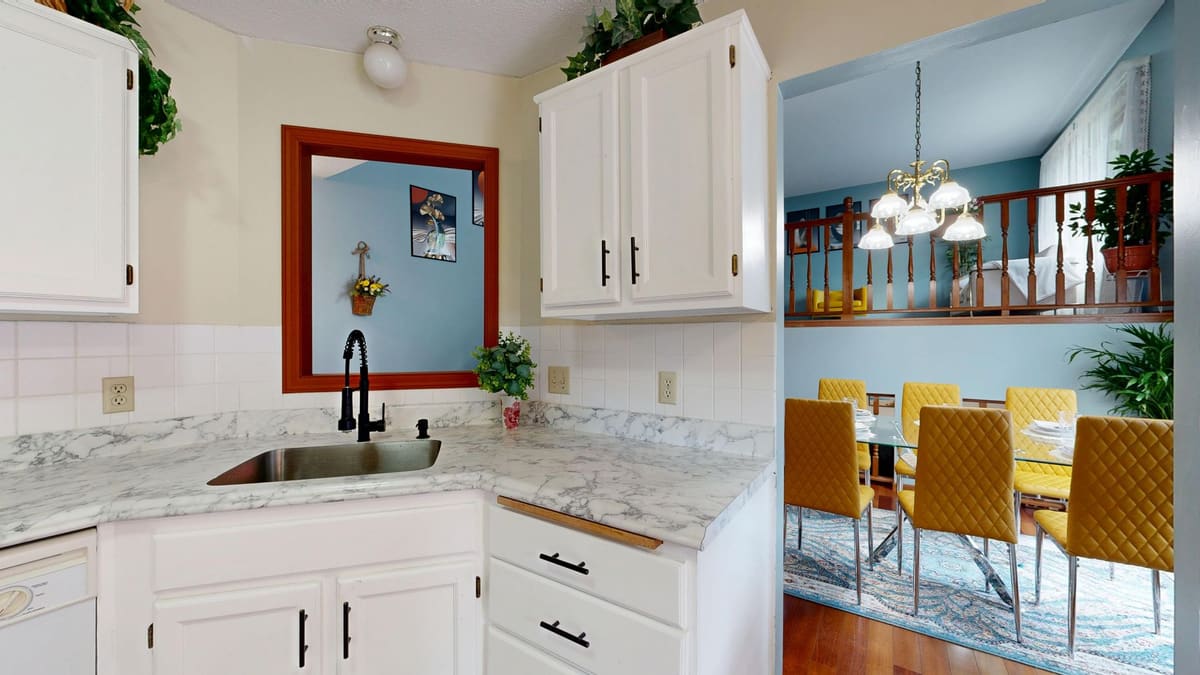 Photo by Peter Vang on Pexels
Once your total is set, these are the line items worth protecting, even if it means trimming somewhere else.
Countertops
You touch your countertops dozens of times a day, and you see them in every photo of the room. This is not the place to go with the cheapest laminate available. Quartz, in particular, holds up well to daily wear, needs no sealing, and is consistently one of the upgrades real estate agents point to when a kitchen sells faster or for more. The National Association of Realtors’ Remodeling Impact Report tracks exactly this kind of buyer appeal, and updated countertops show up again and again as a feature that resonates with buyers walking through an open house.
Cabinets (the Boxes and Hardware, Not Necessarily Custom Everything)
Cabinets typically eat up 30 to 35 percent of a kitchen renovation budget, and for good reason: they’re the biggest visual and functional element in the room. But “splurge on cabinets” doesn’t mean “go fully custom.” Spend on solid boxes, quality hinges, and soft-close drawers, the parts that determine whether your kitchen still functions well in ten years. Semi-custom cabinetry from a reputable manufacturer gets you 90 percent of the look of full custom work for a fraction of the price.
Task Lighting
Under-cabinet lighting, pendant lights over an island, and well-placed recessed cans are cheap to wire in while the walls are already open, and expensive and disruptive to add after the fact. If you’re doing any kind of renovation that involves opening up drywall or ceilings, this is the moment to overbuild your lighting plan, even if you don’t install every fixture right away.
A Great Range or Cooktop (If You Actually Cook)
If you cook most nights, a reliable range with even heat distribution and a hood that actually vents will change how much you enjoy being in the kitchen. According to Zonda’s 2025 Cost vs. Value Report, a minor kitchen remodel, the kind that includes cabinet refacing, a countertop upgrade, and a new range, now returns 112.9 percent of its cost at resale nationally, the highest ROI of any interior remodeling project tracked in the report. If you rarely cook and mostly reheat takeout, this is one splurge you can skip guilt-free.
Where to Save (the Upgrades Nobody Will Notice You Saved On)
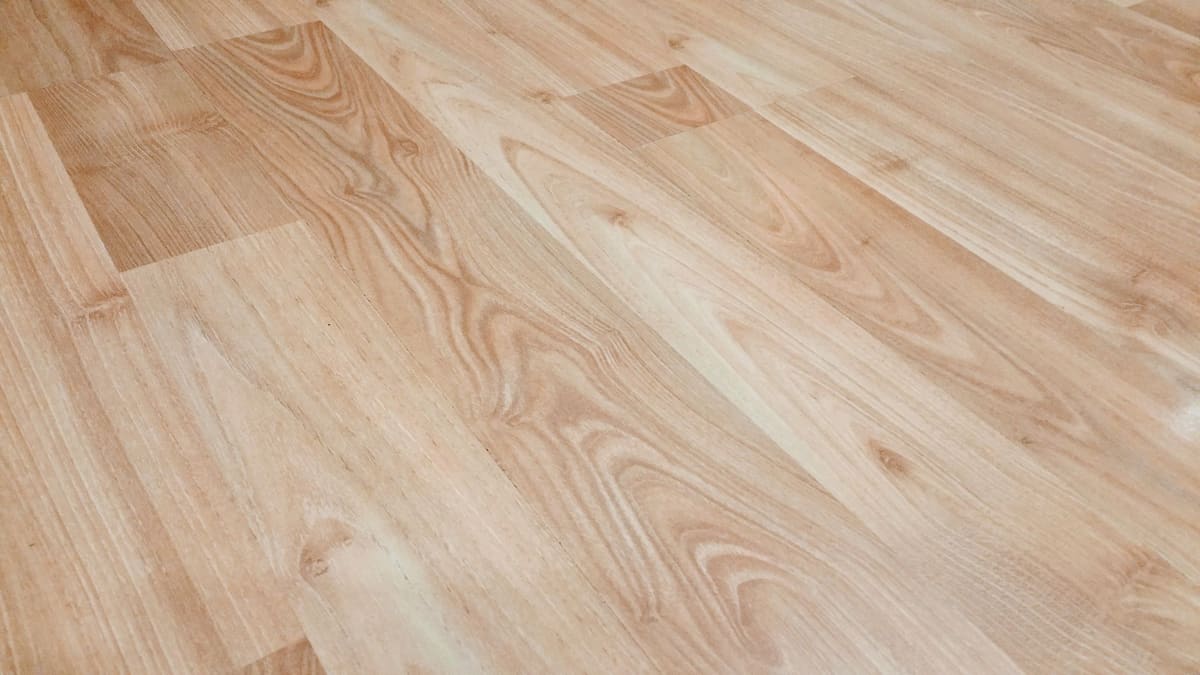 Photo by Digital Buggu on Pexels
These are the places where the expensive version and the budget version look nearly identical once installed.
Flooring
Luxury vinyl plank and porcelain tile that mimics hardwood or natural stone have gotten remarkably convincing. They’re also more water-resistant and scratch-resistant than the real thing, which matters in a room where you’re constantly dropping things and mopping up spills. Save the premium hardwood budget for a room where moisture isn’t a daily concern.
Backsplash
Splurge on a small accent, save on the rest. A striking handmade or patterned tile behind the range as a focal point, paired with simple, inexpensive field tile everywhere else, reads as far more custom (and costs far less) than tiling the entire wall in the expensive material.
Cabinet Interiors and Hardware Finishes
Nobody opens your cabinet doors and inspects the interior finish before deciding whether your kitchen looks expensive. Save on interior shelving materials and drawer box finishes, and put that money toward the exterior fronts and countertops people actually see.
Appliances You Rarely Use
A second oven, a built-in wine fridge, a warming drawer: these are lovely if you genuinely use them, and a waste of budget if they’ll sit mostly empty. Unless you entertain often or have a specific reason for the extra capacity, a solid mid-range primary appliance suite performs nearly as well day to day as the professional-grade version, without the professional-grade price tag.
Your Splurge-or-Save Budget Split, by Total Renovation Size
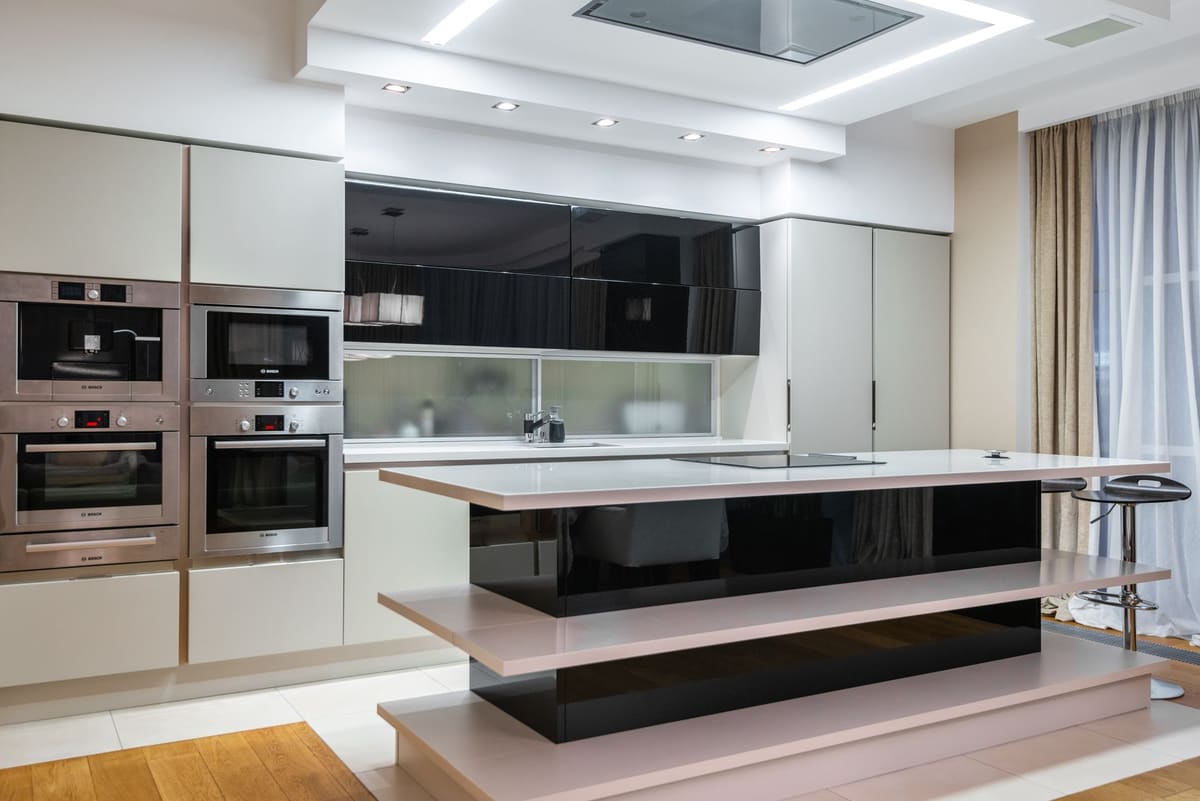 Photo by Max Vakhtbovych on Pexels
How you divide your dollars should shift depending on the total size of the project. Here’s a rough starting point:
| Total Budget | Splurge On | Save On |
|---|---|---|
| $10,000-$15,000 refresh | Hardware, a statement light fixture, one accent detail | Everything else: paint over replace, refinish over reface |
| $25,000-$40,000 mid-range | Countertops, cabinet boxes, task lighting | Flooring, backsplash field tile, appliance extras |
| $60,000+ full gut | Countertops, custom cabinet storage, a chef-grade range, layout changes | Cabinet interiors, secondary appliances, decorative hardware upgrades |
If your budget is tight, our full budget kitchen makeover guide breaks down how to prioritize when you can’t do everything at once. For very tight budgets, a complete kitchen refresh for under $500 shows how much visual impact you can get from paint, hardware, and lighting alone, without touching cabinets or counters at all. And if you’ve got a little more room to work with, updating a kitchen for under $1,000 covers the next tier up, where small structural touches start to become possible.
It also helps to think about what kind of renovator you are. An everyday cook should weight their splurge dollars toward the range, counter workspace, and storage that makes prep easier. An entertainer should prioritize the island, seating, and lighting that make the space work for a crowd. Someone renovating primarily to sell should lean hardest into countertops and cabinets, the two upgrades buyers and agents consistently respond to.
Frequently Asked Questions
What percentage of a kitchen renovation budget should go to cabinets?
Roughly 30 to 35 percent is typical. Cabinets are the single biggest line item in most kitchen renovations, so deciding early between stock, semi-custom, and fully custom options has the biggest impact on your total.
What should you never skimp on in a kitchen remodel?
Countertops, cabinet boxes and hinges, and task lighting. All three are expensive and genuinely disruptive to redo later, so it’s worth getting them right the first time.
What is the cheapest way to update a kitchen without a full renovation?
Refacing or repainting cabinets, swapping hardware, and adding new lighting can deliver most of the visual impact of a full renovation for a small fraction of the cost.
Is it worth splurging on kitchen appliances?
Only if you cook often. If you’re in the kitchen daily, a quality range makes a real difference. If you cook occasionally, a reliable mid-range appliance performs nearly as well for day-to-day use.
How much contingency should I add to my kitchen renovation budget?
Most planners recommend 15 to 20 percent on top of your quoted total, and more than that for older homes where plumbing or electrical issues are more likely to turn up once walls come down.
Do quartz countertops add resale value?
Yes. Quartz and natural stone are consistently cited as one of the higher-return kitchen upgrades, and they’re a feature buyers notice immediately when touring a home.
What’s a realistic budget for a mid-range kitchen remodel?
Most mid-range remodels land between $25,000 and $40,000, depending on whether the layout changes and how much you spend on cabinetry.
Should I save on flooring in a kitchen remodel?
Yes, in most cases. Luxury vinyl plank now closely mimics hardwood and stone at a much lower cost, and it holds up better to spills and dropped pans than either.
The Bottom Line
The goal of a kitchen renovation budget was never to spend less. It’s to spend on purpose. Protect the countertops, cabinet boxes, task lighting, and range if you cook, since those are the choices you’ll live with every single day. Save on flooring, backsplash field tile, cabinet interiors, and appliances you won’t use often, since nobody will ever guess you saved there. Get those two lists right, and a mid-range budget can look and function like a much bigger one.


