
Budget Material Alternatives: High-End Looks for Less
You don’t need a marble budget to get a marble kitchen. Budget material alternatives, the porcelain, quartz, vinyl, and paint-based swaps that mimic pricier finishes, have gotten good enough that the gap between “looks luxe” and “is luxe” has never been smaller. The savings, meanwhile, are often 50 to 80 percent.
This guide is a plain-English rundown of the best budget material alternatives on the market right now: what each swap really costs next to the real thing, how convincing it looks up close, and, just as important, when the cheap version is the smart choice and when it isn’t.
What Counts as a Good “Material Dupe” (and What Doesn’t)
A good budget material alternative isn’t a knockoff. It’s a smart substitution, something that delivers the same look and feel for a fraction of the price, without pretending to be something it’s not. A bad dupe is the one that photographs fine but falls apart in six months or reads as fake the second someone touches it.
There are three tests worth running before you commit to any swap:
- Does it read right from three feet away? Most rooms are experienced at a distance, not under a magnifying glass. If a porcelain tile has convincing veining and a matte finish, almost nobody clocks it as “not marble” from across the kitchen.
- Does it survive daily use? A hardware finish that wears through in a month, or a rug fiber that mats after one season, isn’t a bargain. It’s a repeat purchase.
- Does it hold up at resale? Some swaps are invisible to a buyer’s eye. Others read as “cut corners” the moment an inspector or agent gets close.
Set your expectations going in: cheaper materials usually trade some durability, repairability, or fine detail for the savings. Knowing exactly what you’re giving up is what separates a smart swap from a regret.
The Master Swap Table: High-End Materials and Their Budget Alternatives
Here’s the scannable version, the swaps that come up again and again across kitchens, baths, floors, and furniture.
| High-end material | Budget alternative | Rough price gap | How convincing |
|---|---|---|---|
| Marble slab | Porcelain or quartz with marble veining, or cultured marble | $15-40/sq ft (marble) vs. $3-10 (porcelain), $2-8 (LVT) | Very, especially in a matte or honed finish |
| Natural hardwood | Luxury vinyl plank (LVP) or engineered wood | Hardwood often 2-4x the cost of LVP | High for LVP; near-perfect for engineered wood |
| Natural stone (granite, quartzite) | Quartz or porcelain slab | Quartz typically runs 20-40% less installed | Very, plus no sealing required |
| Solid brass hardware and fixtures | Brushed-gold or PVD-finished zinc | Often 60-80% less per piece | High until heavy daily wear over years |
| Plaster or limewash walls | Limewash paint or textured roller finishes | A few hundred dollars vs. thousands for hand-applied plaster | Very close, especially limewash paint |
| Solid wood furniture | Veneer over MDF, or thrifted solid pieces | 50-70% less new | Depends heavily on the veneer quality |
| Wool or natural-fiber rugs | Polypropylene or viscose blends | Often half the price or less | Good for look, softer underfoot varies |
That table alone answers most of the “what should I actually swap” question. The sections below go deeper on where the savings are biggest and where they’re not worth chasing.
Kitchen & Bath: Where the Biggest Savings Live
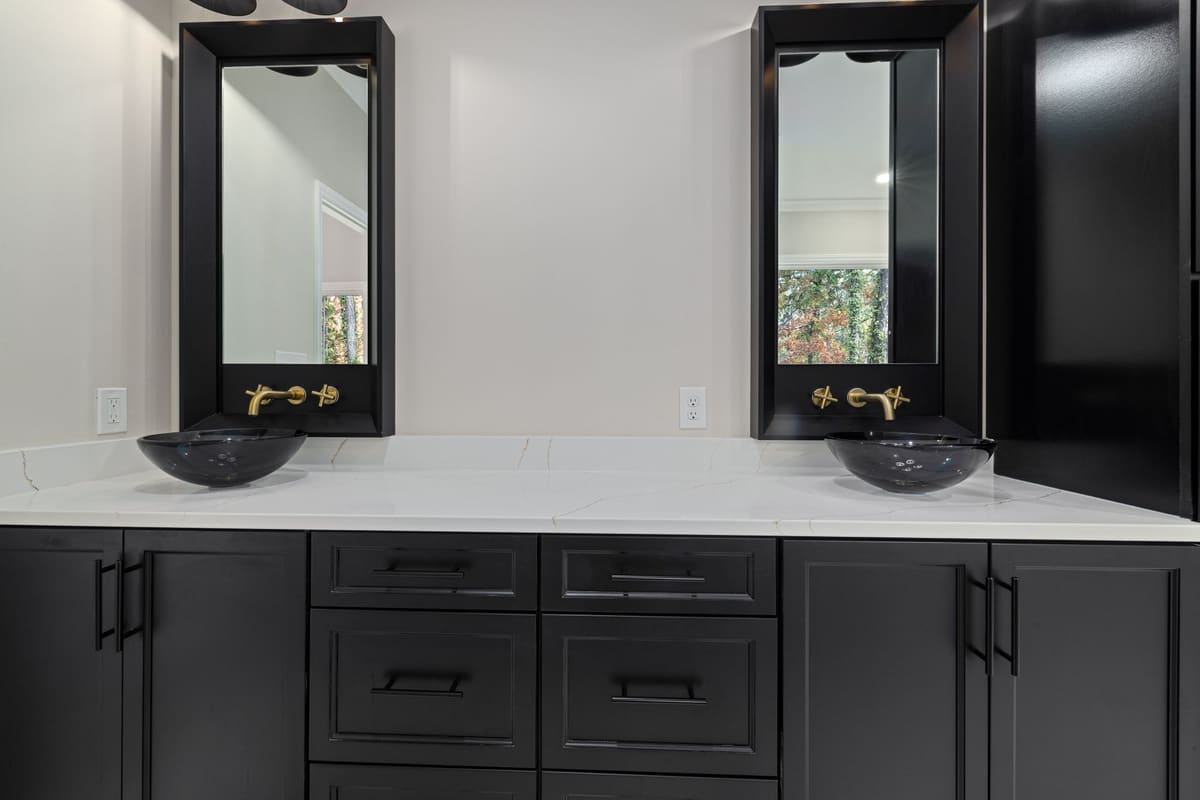 Photo by Curtis Adams on Pexels
Kitchens and bathrooms carry the most expensive materials in a house, which means they also carry the biggest potential savings.
Countertops are the clearest example. Real marble runs $15 to $40 per square foot installed and needs regular sealing to resist staining. Quartz, an engineered stone that comes in convincing marble-look patterns, runs closer to $50 to $80 installed but never needs sealing and resists etching from lemon juice or wine, something real marble can’t claim. Porcelain slab is another strong option, especially for a bookmatched, dramatic veining look at a lower price point than natural stone. Laminate has come a long way too. The better laminate lines use high-definition printing that mimics stone grain convincingly enough to fool a quick glance, though it won’t survive a hot pan set directly on it. If you want a deeper breakdown of exactly which countertop material fits which budget, our guide to budget countertop options walks through the numbers room by room.
Backsplash is one of the lowest-risk places to save. A small run of real marble mosaic behind a stove can serve as a splurge accent, while the rest of the wall gets peel-and-stick tile or a porcelain look-alike. Because a backsplash is decorative rather than load-bearing or heavily worn, almost nobody notices the difference.
Flooring in water-prone rooms is where LVT and LVP genuinely outperform tile, not just on price but on comfort underfoot and install speed. A tile floor needs a mortar bed, grout lines that eventually need resealing, and a install timeline measured in days. Click-lock LVP goes down in an afternoon, is warmer to stand on, and handles a dropped glass better than ceramic.
Cabinet hardware and faucets are the easiest wins in the whole list. A brushed-gold or PVD (physical vapor deposition) finish on zinc hardware photographs identically to solid brass and holds up for years of daily use before any wear becomes visible.
Walls, Floors & Soft Finishes
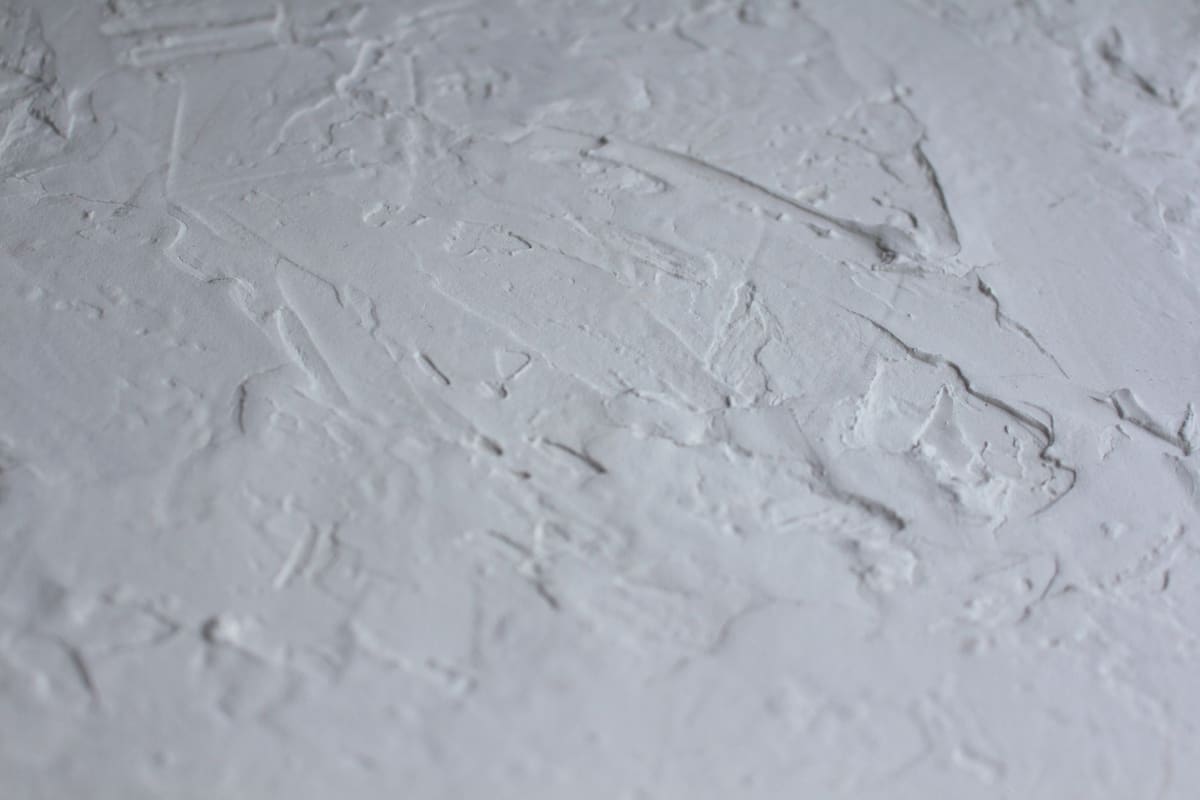 Photo by Yulia Shapereva s on Pexels
Beyond the kitchen and bath, the biggest-impact budget material alternatives are often the cheapest per square foot.
Limewash and Roman clay looks used to require a plasterer and a few thousand dollars. Now, limewash paint and textured roller techniques get you 80 percent of the look for the cost of a few gallons of paint and a weekend. The mineral-based sheen and subtle color variation that make limewash walls feel expensive are largely a function of application technique, not the material itself, which is why paint versions read so convincingly.
Faux marble and stone-look tile live and die by finish. A honed (matte) finish hides the repetition in a printed pattern far better than a glossy polished finish does, because gloss reflects light in a way that makes a repeating pattern obvious. If you’re shopping tile, ask specifically about pattern repeat, how many unique “faces” the print run cycles through, since a short repeat is the number one thing that makes a stone-look tile floor look printed rather than natural.
Rugs, drapery, and upholstery fabric have their own dupe economy. Linen-look polyester, boucle blends, and faux leather all deliver most of the visual texture of the natural-fiber version at a fraction of the price and, in the case of faux leather, with far better stain resistance for a house with kids or pets.
Where to Splurge vs. Where to Save
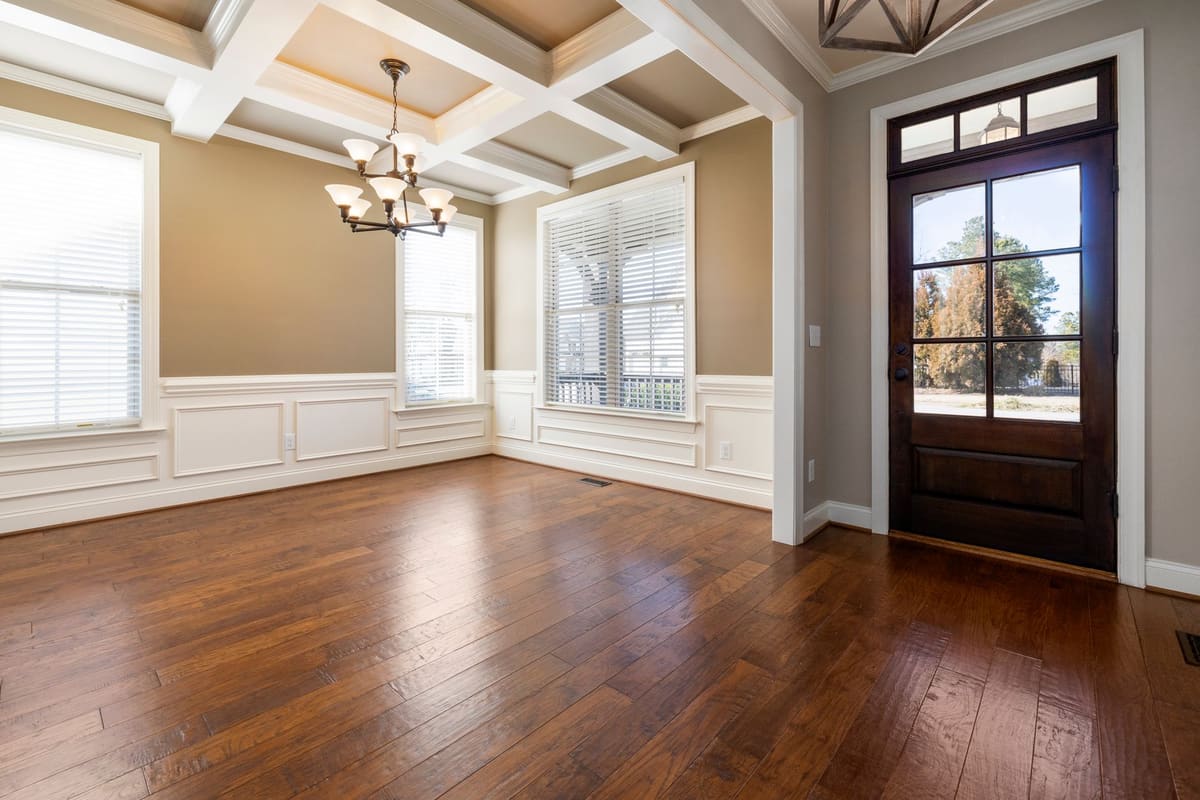 Photo by Curtis Adams on Pexels
This is the question the swap table can’t answer on its own, and it’s the one that actually determines whether your budget material alternatives read as smart or cheap.
Save on: low-traffic surfaces, decorative-only pieces, anything trend-driven that you might want to change again in a few years, and backsplashes or accent walls that get looked at but not touched, sat on, or cooked on.
Splurge on: high-touch, high-wear zones, the kitchen counter you actually cook and cut on, entry flooring that takes the brunt of daily foot traffic, plumbing fixtures you’re not eager to replace again in five years, and seating you use every single day.
Resale is the tiebreaker when you’re not sure. Cheap swaps in low-wear, decorative spots (an accent wall, a guest room rug) rarely register with a buyer. But quality shows in kitchens, primary bathrooms, and entry flooring, the rooms every buyer’s agent walks through slowly. That’s where a budget swap that looks obviously budget can actually cost you at resale.
The quick decision rule you can reuse on any material: if you touch it, stand on it, or cook on it daily, lean toward the real thing or the highest-grade alternative. If you just look at it, the cheap version is almost always the smart choice.
How to Shop So the Dupe Doesn’t Look Cheap
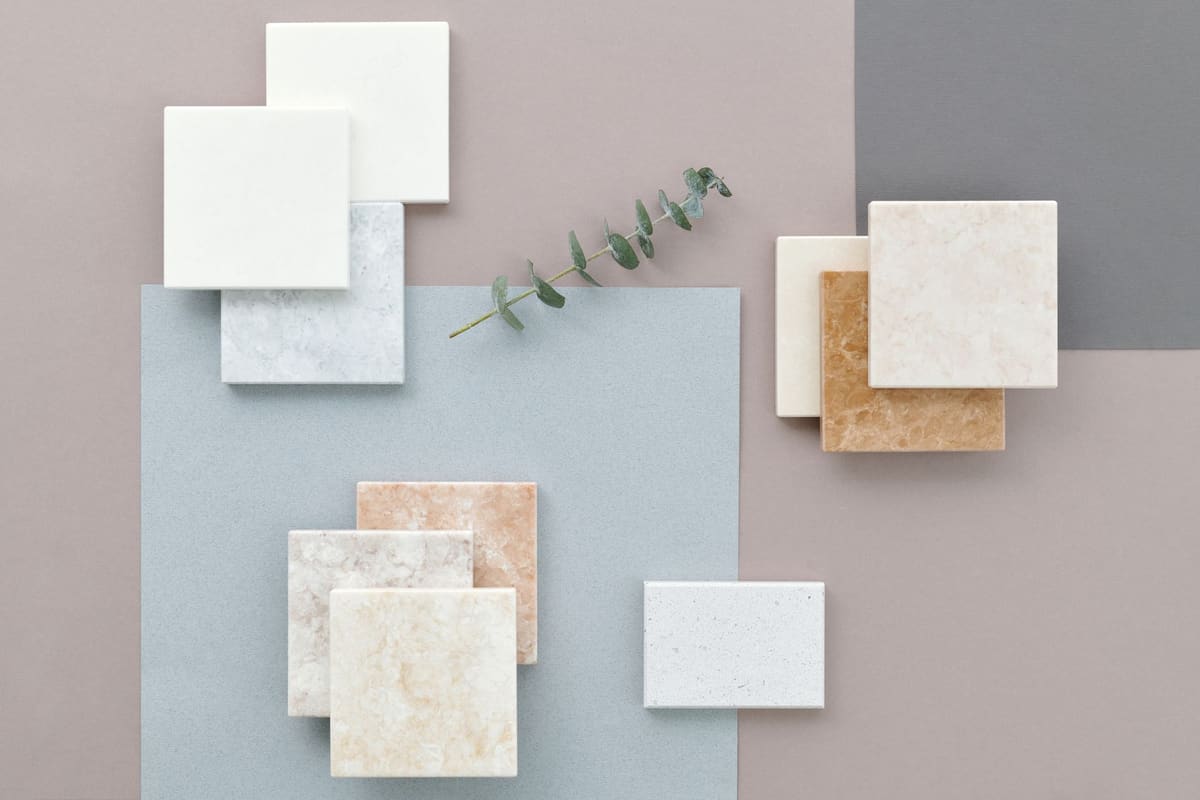 Photo by Edward Jenner on Pexels
A handful of shopping habits separate a convincing budget material alternative from one that reads as a downgrade.
- Buy the best finish you can afford in the cheaper material. A matte or honed finish hides flaws that a glossy one exposes, and a heavier-gauge vinyl plank wears and dents less than a thin, bargain-bin roll.
- Order samples before you commit. Look at the veining or pattern repeat in daylight, not just under a showroom’s flattering lighting. A short, obvious repeat is the fastest way for a stone-look product to look printed instead of natural.
- Shop clearance, remnant, and direct-import lots for your few splurge spots. This is how you afford the one or two places (a countertop, an entry floor) where the real material is worth the stretch.
- Mix high and low deliberately. One genuine material used as a focal point, a real marble backsplash niche, a solid-wood dining table, makes the budget materials around it read as an intentional design choice rather than a compromise.
Conclusion
The goal of chasing budget material alternatives was never to fool anyone. It’s to spend your money where it actually shows and where it actually lasts, and let smart substitutions cover everything else. Get the splurge-versus-save call right in a handful of key spots, and the rest of the house can run almost entirely on convincing, budget-friendly materials without anyone noticing the difference.
If this swap-by-swap approach clicked for you, it’s really one piece of a bigger idea: making your whole home look more expensive without a renovation budget. And once you’ve tackled materials, our roundup of designer decor dupes covers the furniture and accessory side of the same equation.
Frequently Asked Questions
What looks like marble but is less expensive?
Porcelain or quartz with marble-style veining, or cultured and faux marble products, all get you most of the look for roughly $3 to $10 per square foot, compared to $15 to $40 for a real marble slab.
What is the cheapest material that still looks high-end?
Luxury vinyl (LVP or LVT) and porcelain tend to lead on price-to-look ratio for hard surfaces. For walls, a paint technique like limewash is the cheapest material upgrade available, since the cost is almost entirely labor and a few gallons of paint.
Are budget material alternatives durable?
Often, yes. Quartz and porcelain can actually outlast marble in day-to-day use since neither needs sealing and both resist etching. The real trade-off is usually fine detail or long-term repairability, not lifespan.
What’s a good alternative to hardwood floors?
Luxury vinyl plank is the strongest choice when water resistance and cost both matter. Engineered wood is the better pick when you want a real wood surface layer for meaningfully less than solid hardwood.
Do cheaper materials hurt home resale value?
Rarely, in low-wear or decorative spots. Buyers generally don’t clock the difference on an accent wall or a guest room floor. Kitchens, bathrooms, and entry flooring are a different story: quality shows there, so it’s worth splurging in those specific rooms.
Quartz vs. marble, which is the smarter budget pick?
Quartz skips the mining premium that comes with natural stone, never needs sealing, resists staining and etching, and now comes in patterns convincing enough to pass for real marble in most kitchens.
How do I make a budget material not look cheap?
Choose a matte or honed finish over glossy, order physical samples and check them in real daylight, buy the heaviest-wearing grade you can afford, and pair the swap with one genuinely real material nearby as a focal point.
Where can I buy affordable high-end material alternatives?
Big-box home improvement stores and online stone and tile suppliers cover most budget swaps. Flooring retailers carry a wide range of LVP and LVT grades, and clearance or remnant lots are worth checking for the few spots where you’re splurging on the real material.


