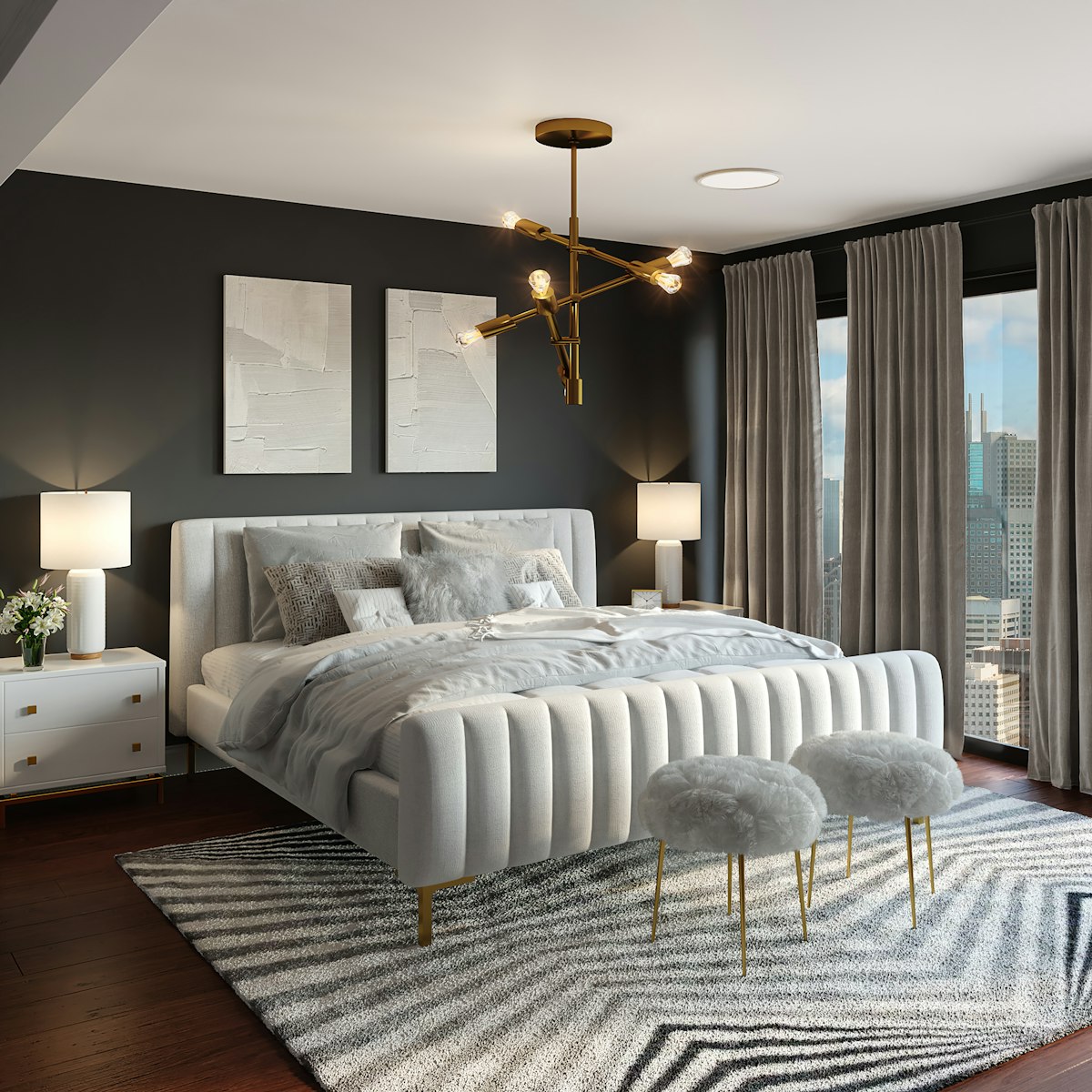
How to Turn Your Bedroom Into a True Sanctuary
Sleep experts and interior designers agree on more than you'd think. Here's how to design a bedroom that actually helps you rest — and looks beautiful doing it.
Your bedroom is the only room in your home that exists entirely for you. And yet most of us treat it as an afterthought — the place where mismatched furniture goes to live and laundry piles accumulate.
The science of sleep design is real. The principles are simple. Here’s how to apply both.
Start With the Bed
The bed is the room. Everything else is in service of it.
Invest in quality bedding. Not expensive for its own sake — but linen, cotton percale, or quality cotton are worth the cost. Thread count matters less than fiber quality. Look for 100% long-staple cotton or French or Belgian linen.
Layer, don’t just stack. A flat sheet, a light cotton blanket, and a duvet with a removable cover give you flexibility for different temperatures and create that hotel-bed look that photographs so well.
Get the pillow count right. Two sleeping pillows, two euro shams, two standard shams, and one or two accent pillows is the formula most designers use. It looks full without being ridiculous.
Control Light Completely
The single biggest upgrade most bedrooms need is better window treatments.
Blackout curtains don’t have to look institutional. Linen blackout curtains exist, look beautiful, and genuinely block light.
If your room gets morning sun, this matters more than almost anything else for sleep quality.
Address the Temperature
Studies consistently show the optimal sleep temperature is between 65–68°F (18–20°C). If you run warm, a cooling mattress pad is more effective than cranking the AC. If you run cold, a weighted blanket adds warmth without overheating.
Remove the Screens
This is the design choice that requires no budget at all — just willpower.
The bedroom should not contain a TV if you care about sleep. The blue light from screens suppresses melatonin production. More practically: having a TV in the bedroom makes the room feel like a living space, not a sleep space.
Choose Calming Colors
The research on color psychology in the bedroom is consistent: cool, muted tones — soft blues, greens, and neutrals — are associated with lower heart rates and easier sleep onset.
Avoid saturated reds, oranges, or yellows in large doses.
The most versatile bedroom palette: a warm white or greige on the walls, layered warm neutrals in the textiles, and one or two grounding dark accents (a dark nightstand, a brass lamp).
Declutter the Surfaces
Every surface in the bedroom should be intentional. The nightstand is the most important surface in the room — it’s the last thing you see before sleep and the first thing you see when you wake.
On the nightstand, keep only:
- A lamp
- Your book (not your phone)
- A glass of water
- One small object you love
That’s it. The discipline is the design.
Add Texture, Not Pattern
Bold patterns in a bedroom create visual stimulation, which works against rest. Instead, layer textures — a waffle-knit throw, a linen duvet, a soft wool rug, a ribbed ceramic lamp base. Texture reads as rich and layered without demanding your attention.
The best bedroom is the one that makes you exhale when you walk in. That feeling is the result of deliberate choices, not expensive ones.