
How to Add Warmth to a Modern Kitchen
A warm modern kitchen is one of those things that sounds like a contradiction until you actually see it done well. Sleek cabinet fronts, clean lines, and a wall of stainless steel photograph beautifully, but standing in that kitchen at 7 a.m. with the overhead lights blazing can feel more like a showroom than a home. The good news is that warming up a modern kitchen doesn’t mean tearing out the cabinets or covering every surface in shiplap. It just takes a handful of deliberate layers: wood tone, light temperature, texture, and a warmer neutral palette, added in the right proportions so the space still reads as modern. Here’s how to do it, room detail by room detail.
Start With Warm, Layered Lighting
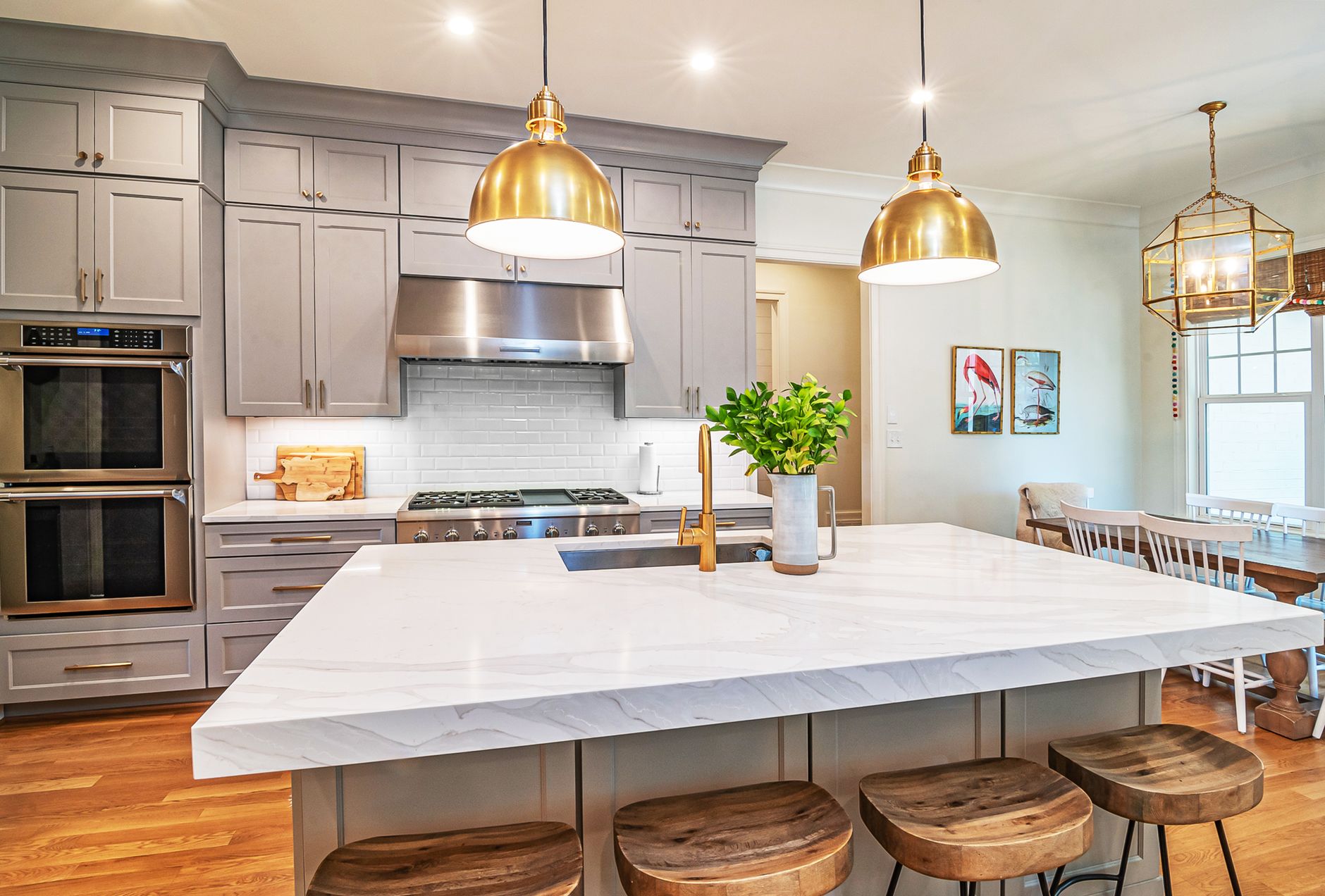 Photo by Curtis Adams on Pexels
Lighting is the fastest, cheapest fix for a cold-feeling kitchen, and it’s also the one people overlook the longest. If your kitchen is lit entirely by a bank of recessed cans running on cool-white bulbs, that alone can make an otherwise beautiful space feel clinical.
- Swap to warm-white bulbs. Look for bulbs in the 2700K to 3000K range, the same warm color temperature ENERGY STAR uses to describe light that matches a classic incandescent glow. Anything higher (4000K and up) reads as office or hospital lighting, not home.
- Add under-cabinet and toe-kick LED strips. A soft glow along the underside of your upper cabinets and along the base of your lower cabinets does more for ambiance than an extra recessed light ever will. Toe-kick lighting in particular has become a favorite detail in newer kitchen builds because it adds warmth at night without adding visual clutter during the day.
- Layer in a pendant or two. Recessed lighting alone is flat and shadowless. One or two pendants over the island, on a dimmer, gives the room depth and a focal point that overhead cans can’t provide on their own.
None of this requires an electrician visit to start. New bulbs are a five-minute swap, and plug-in LED strips with adhesive backing can go under cabinets in an afternoon.
Bring In Real Wood Tones
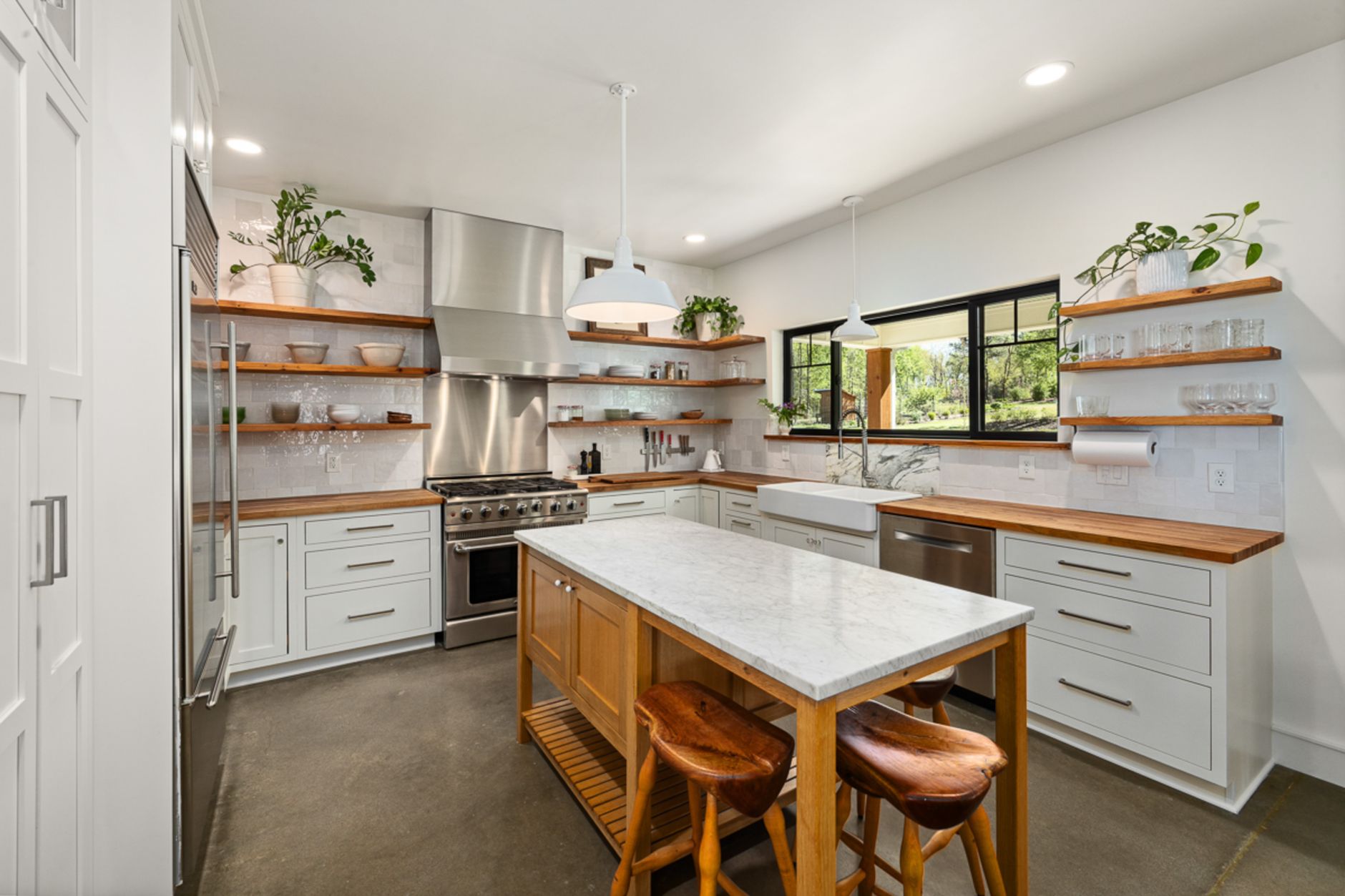 Photo by Curtis Adams on Pexels
Wood is the single most effective material for warming up a modern kitchen, because it introduces natural grain and variation into a space that’s otherwise full of flat, uniform surfaces.
You don’t need a full wood cabinet run to get the effect. Smaller, contained doses work just as well and are far more reversible:
- A run of open shelving in a warm wood tone, even just one wall, breaks up an all-white or all-stainless kitchen.
- A butcher block section on an island or a single run of counter adds warmth right at eye level, where it matters most.
- A wood range hood, whether it’s a full wood surround or a wood-clad panel over a stainless hood insert, becomes a natural focal point.
- Wood bar stools at the island do a surprising amount of work for very little cost or commitment.
The one rule worth following: keep your wood undertones consistent. Mixing a warm honey oak with a cool grey-washed wood in the same sightline tends to look accidental rather than intentional. Pick one undertone (warm gold, warm brown, or warm grey) and stick with it across shelving, stools, and any wood accents in the room.
If you want to see how far this can be pushed, the modern farmhouse kitchen look leans much harder into wood and rustic texture. It’s a good reference point for the upper end of the range, and a useful contrast for understanding where “warm modern” stops and “farmhouse” begins.
Swap Stark White for Warm Neutrals
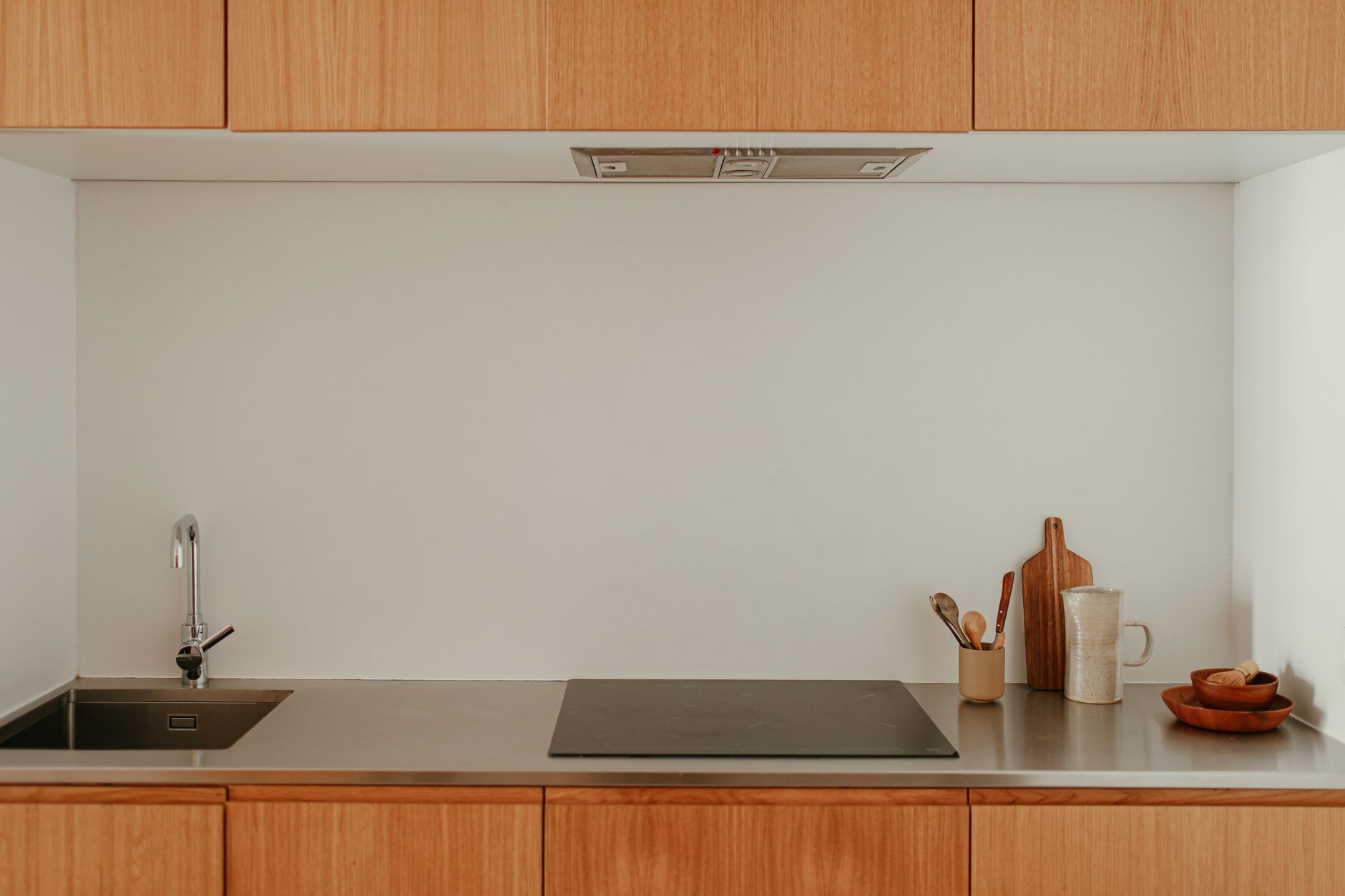 Photo by Cup of Couple on Pexels
Stark white cabinets and countertops are a hallmark of a certain era of modern kitchen design, and they can feel cold, especially under cool lighting or in a north-facing room that doesn’t get much direct sun.
You don’t have to repaint the whole kitchen to fix this. A few targeted swaps go a long way:
- Move from stark white to a warm white, greige, taupe, or soft mushroom tone on cabinets or walls. These read as neutral and modern, not “colorful,” while carrying noticeably more warmth than a true white.
- If you’re not ready to repaint cabinets, start with the walls. A warm neutral wall color behind white or light cabinets softens the whole room without touching the cabinetry at all.
- Consider a warm-toned stone or quartz countertop instead of a stark white or cool grey slab. Countertops with subtle gold, tan, or beige veining pull warmth into the room at a large scale, which matters more than almost any small accessory.
If a full repaint isn’t in the budget right now, walls are the lowest-commitment place to start, and lower cabinets (which take more visual weight than uppers) are the next best place to introduce warmth if you do decide to paint.
Layer In Texture and Natural Materials
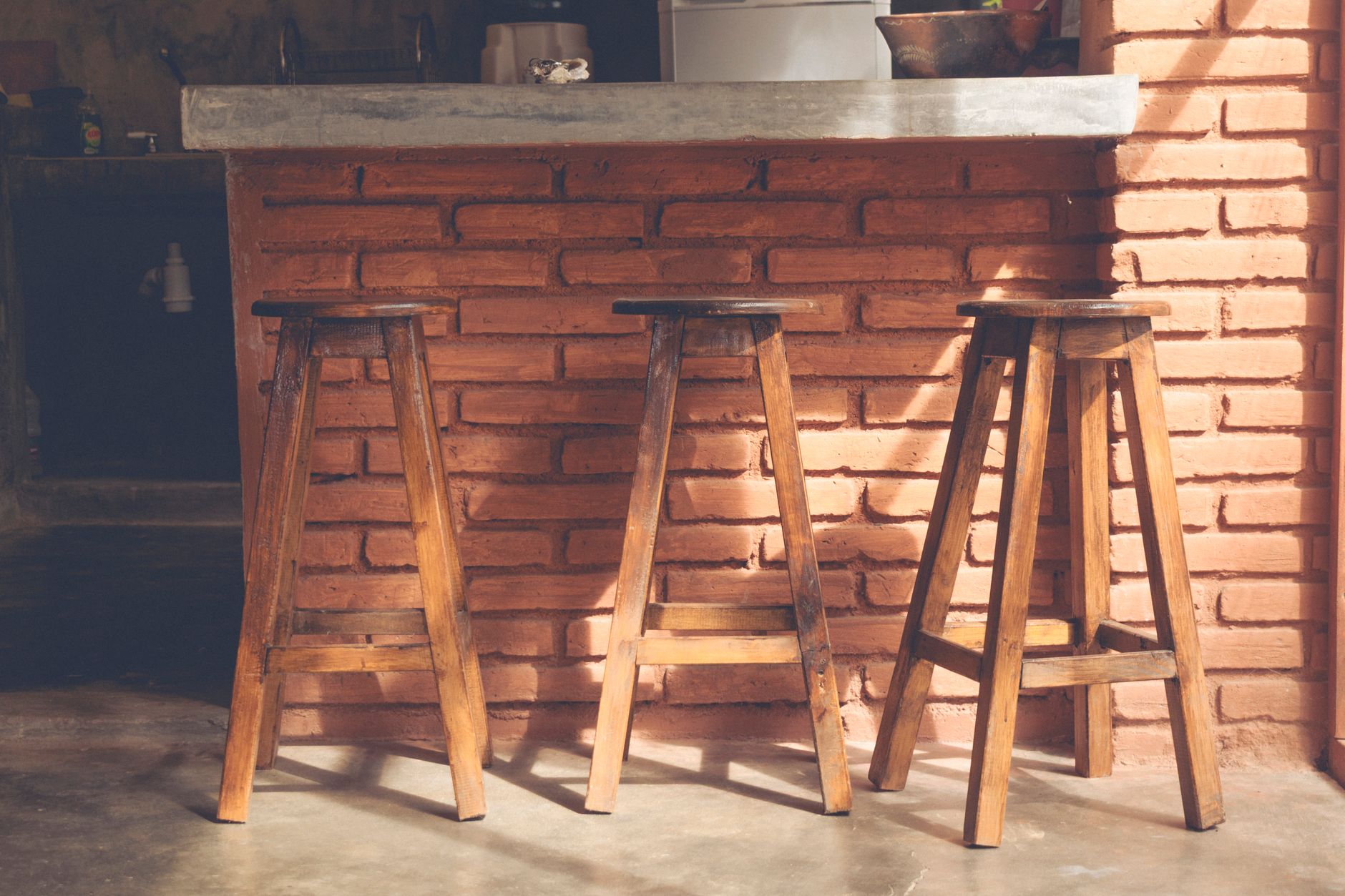 Photo by Yunuen Zempoaltecatl on Pexels
A modern kitchen that’s all hard, smooth surfaces (quartz, glass, lacquer, stainless) can start to feel sterile no matter how good the lighting and color are. Texture is what breaks that up.
- Woven bar stools or a rattan pendant shade introduce a handmade, organic quality that contrasts nicely with sleek cabinetry.
- A jute or wool runner rug in front of the sink or stove adds softness underfoot and visual warmth at floor level, an area that’s easy to forget about in kitchen design.
- Textured backsplash tile, like a subtle zellige or handmade-look tile, catches light differently than a flat subway tile and adds depth without adding pattern or clutter.
- A few plants or a standing vase of greenery on the counter is the lowest-effort, lowest-cost item on this whole list, and it works every time.
Warm Up the Hardware and Fixtures
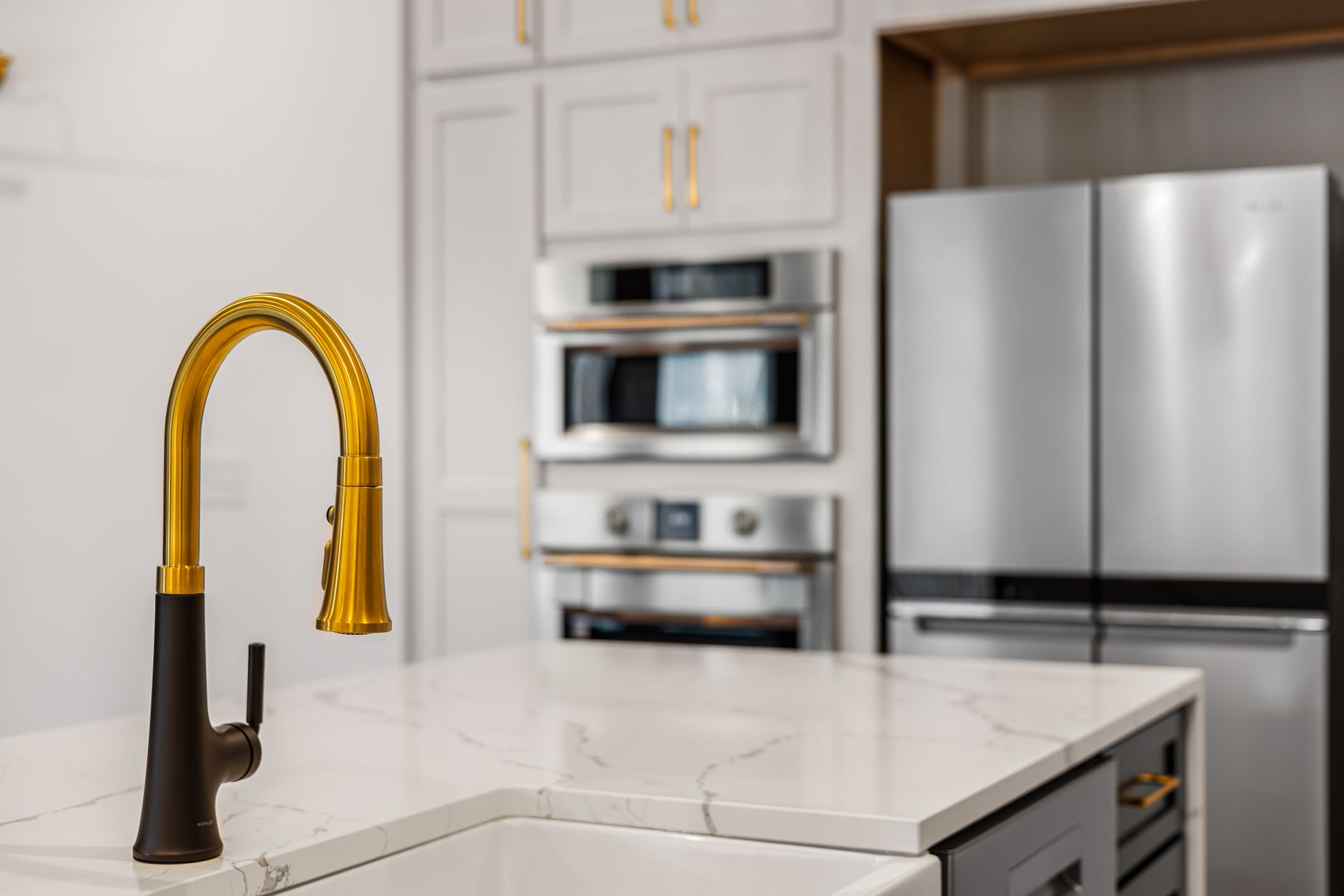 Photo by Curtis Adams on Pexels
Hardware finish has an outsized effect on how a kitchen reads, because it’s the metal you actually touch and see up close, dozens of times a day.
Brushed or unlacquered brass, warm gold, and matte bronze all read warmer than chrome or polished nickel, and they’ve become the default choice in most new modern kitchens for exactly that reason. Swapping cabinet pulls and a faucet is one of the more affordable full-kitchen updates you can make, and it doesn’t require touching a single cabinet door.
One detail worth knowing: mixing two warm metals, like brass hardware paired with a matte black faucet, reads as intentional and current rather than mismatched. Kitchen designers surveyed by the National Kitchen and Bath Association describe this kind of curated finish mixing as a defining move in current kitchens, layering metal, wood, and stone finishes for depth instead of matching everything to one metal. What looks off is mixing a warm metal with a cool one (brass hardware next to chrome faucet, for example) without any other unifying element in the room.
The Warmth Ratio: How Much Is Too Much
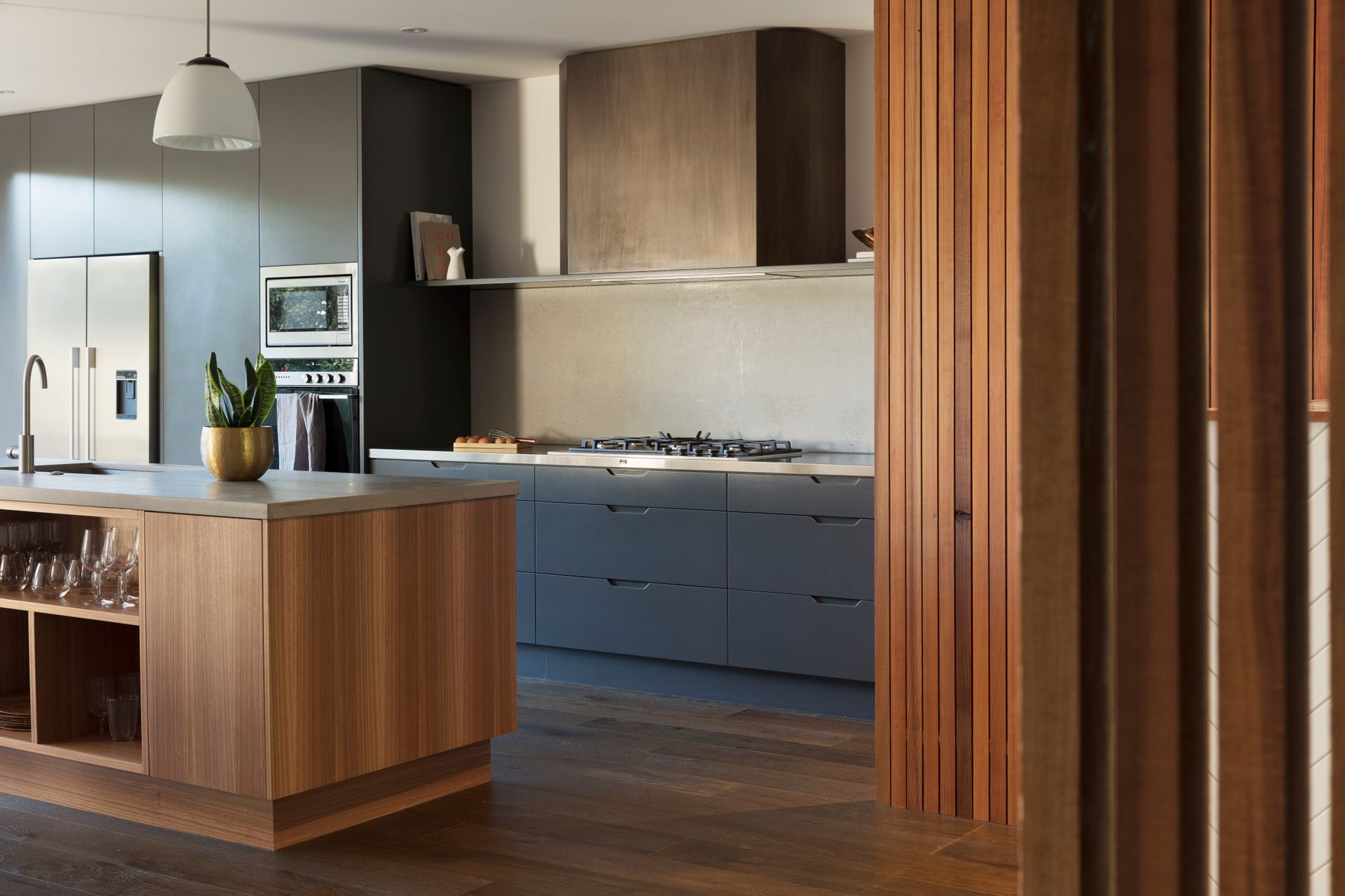 Photo by Metalier Coatings on Pexels
This is the part most warm-kitchen guides skip, and it’s the part that actually keeps a space looking modern instead of drifting into farmhouse or, worse, cluttered.
A simple ratio to work from: roughly 60% warm neutral base (walls, cabinets, countertops), 30% wood and texture (shelving, stools, rugs, backsplash), and 10% dark or metal accent (hardware, fixtures, a black faucet or light fixture). It borrows the same logic as the 60-30-10 rule interior designers use to balance color schemes, just applied to material and texture instead of paint. Once wood and texture start creeping past that 30% mark, covering every surface, every shelf, every stool, the room tips from “warm modern” into “rustic” or “farmhouse,” even if none of the individual pieces changed.
A few signs you’ve gone too far: more than one pattern competing for attention at once, distressed or heavily rustic wood finishes instead of clean-lined ones, or open shelving so full of styled objects that it starts to look cluttered rather than curated. If you’re adding open shelving as part of this warm-up, it’s worth learning how to style your open shelves properly first, since overloaded shelves are one of the fastest ways to undercut an otherwise well-balanced kitchen.
Before adding one more warm element, ask yourself: does this replace something, or is it just piling on top of what’s already there? Warmth from subtraction and swapping tends to look more intentional than warmth from constant addition.
Frequently Asked Questions
How do I make my modern kitchen feel warm instead of cold?
Layer in warm-toned wood, swap to warm-white lighting (2700K to 3000K), and add texture through a rug, woven stools, or greenery. Small, consistent changes across lighting, wood, and texture add up faster than one big renovation.
What colors make a modern kitchen feel warmer?
Warm neutrals like taupe, greige, warm white, and soft mushroom tones read cozier than stark white or cool grey, while staying just as clean and contemporary.
Does adding wood to a modern kitchen make it look farmhouse instead?
Not if you keep the wood tone consistent and pair it with clean-lined hardware and simple silhouettes rather than distressed or rustic finishes. It’s the styling around the wood, not the wood itself, that tips a kitchen into farmhouse territory.
What’s the best lighting for a warm kitchen feel?
Warm-temperature bulbs in the 2700K to 3000K range, under-cabinet or toe-kick LED strips, and at least one warm pendant light over the island instead of relying on recessed cans alone.
Is brass or gold hardware still in style for modern kitchens?
Yes. Brushed and unlacquered brass or warm gold hardware remains one of the most popular choices for adding warmth to a modern kitchen without looking dated.
How do I warm up an all-white modern kitchen without repainting cabinets?
Focus on a warm-toned rug, wood accents like shelving or a cutting board, warm lighting, and brass hardware. Every one of those is reversible, and none of them require touching the cabinets.
What’s a quick, low-cost way to add warmth to a modern kitchen?
Swap your bulbs to warm white, add a textured rug, and bring in a wood cutting board or bowl as counter styling. All three can be done in a single afternoon for well under $100 combined.
How much wood is too much in a modern kitchen?
Roughly 30% of the visual mix, per the warmth ratio above. Once wood starts dominating every surface, shelving, stools, hood, and floor all at once, it starts reading as farmhouse or rustic rather than modern.
The Bottom Line
A warm modern kitchen isn’t about choosing between “warm” and “modern.” It’s a balance you build in layers: light temperature, a little real wood, a warmer neutral palette, some natural texture, and hardware that catches the light instead of reflecting it coldly. Start with lighting since it’s the cheapest and fastest change, then work through wood, color, and texture at whatever pace your budget allows. For more direction on where your kitchen’s overall style fits, our kitchen style guide is a good next stop, especially if you’re still deciding how far toward “warm” you actually want to go.


